
Indoor Straw Mushroom Cultivation Techniques
Step 1: Preparing net House and Shelves
- The net house (dimensions are approximately 3m high and 4.5m wide, with a length of around 8m, or a size varying depending on actual conditions.
- Covered with waterproof tarpaulin, and inside, an orchid net or wire net can be used. The temperature and humidity inside the net house can be regulated. It is crucial to ensure ventilation in the net house.
- Growing shelves, comprised of bamboo or iron, have 3-4 floors spaced 0.5m apart to allow for convenient movement.
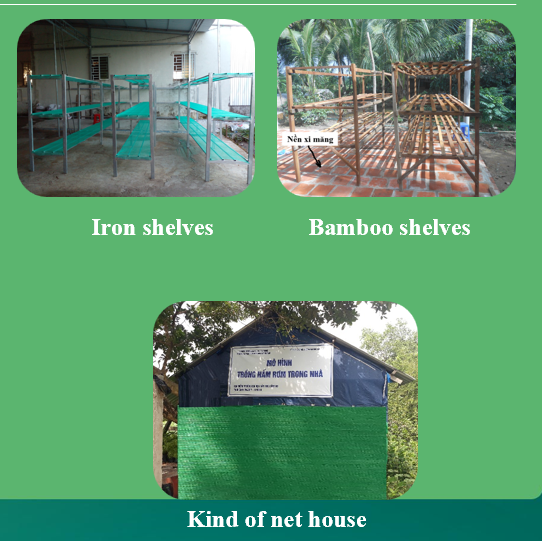
- Growing shelves, comprised of bamboo or iron, have 3-4 floors spaced 0.5m apart to allow for convenient movement.
Step 2: Preparing rice Straw
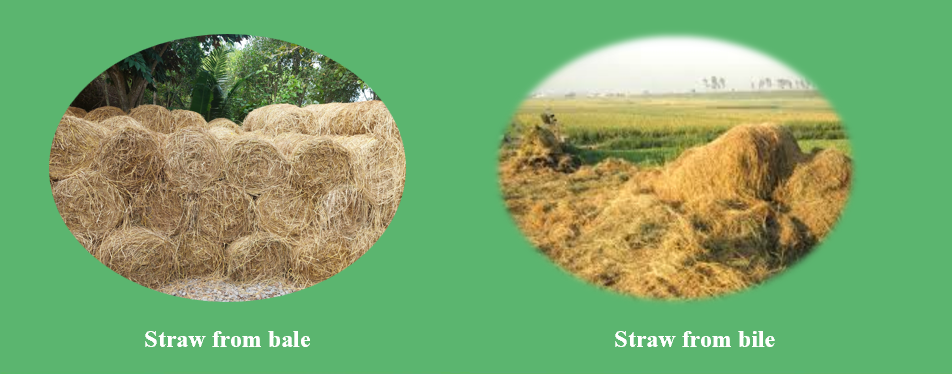
Straws must be selected that are new and disease-free or not rot. In addition, it is necessary to determine that the straw has not been contaminated with salt or pesticides before. Use a bale of straw weighing about 14-6 kg or piles of straw.
Step 3: Straw Treatment
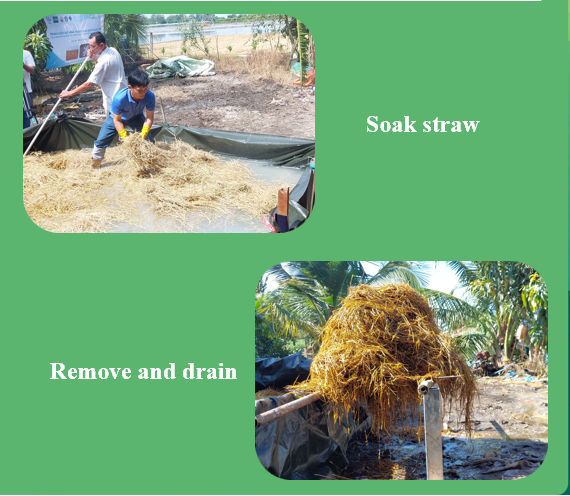
- Prepare a straw-soaking tank. Placing it near the composting area for convenience.
- Use a waterproof tarpaulin to construct the soaking tank. The dimensions can be adjusted based on the actual scale.
- The ground for the tank must be flat, without sharp trees or objects that could tear the walls of the tank.
- Preparing lime solution: Fill the tank with water to a height of about 20cm, then add lime. Stir well and use pH paper to test (aiming for a pH of 13-14). Usually, about 5 kg of lime should be added to 1 m3 of water
- After soaking the straw for approximately 10 minutes, remove and drain it. The straw will appear bright yellow after being soaked in lime solution.
Step 4: Stacking and turning
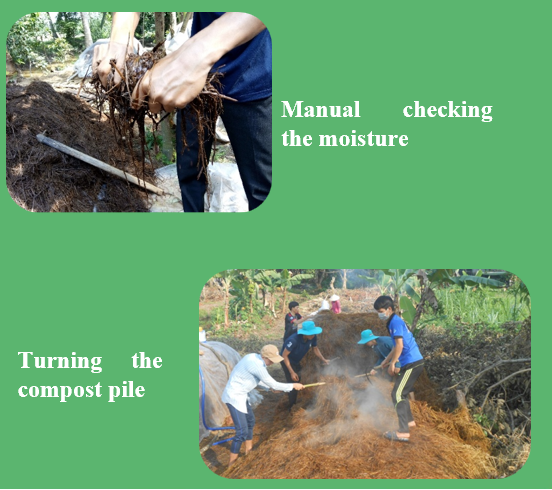
- Arrange the straw in layers, placing a banana plant in the middle, watering, and compressing it with the foot to soften and absorb water (each layer should be 20-30 cm thick). Additionally, sprinkle an extra layer of lime to eliminate other fungi. Remove stalks or debris from the watered straw.
-
Continue stacking layers until the compost pile reaches the desired size (the amount of raw straw to be used is at least 1 ton to ensure that the size of the compost bed is about 1.2 – 1.5 m high, about ≥1.5m wide and 1.5 m long or can be increased depending on the amount of straw). Remove plants from the middle of the pile to create more space. Ensure ventilation of the compost pile and cover it with a waterproof tarp to maintain moisture and heat.
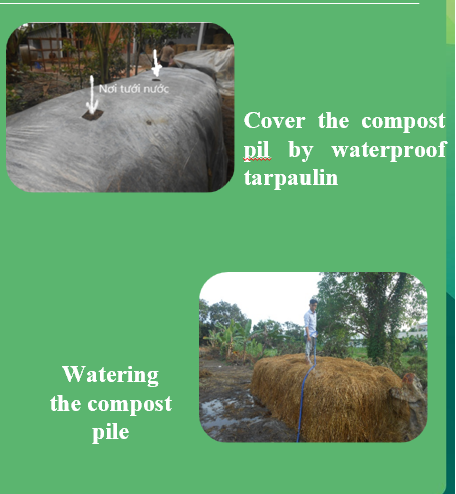
- After 7 days, perform the first turning of the compost pile (from outside to inside and from inside to outside). Add water if there is a lack of moisture and compact the compost pile (if there is excess water, compacting is not necessary). The humidity level must reach 70-75%, and the temperature should be above 70°C.
- After 10 days, perform the second turning. After 17 days of incubation, the straw can be utilized for growing mushrooms.
Step 5: Preparing Mushroom Spawn
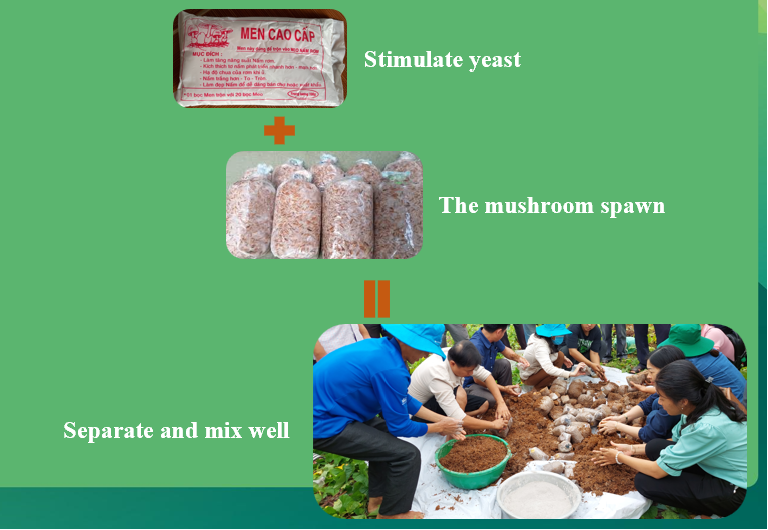
- The mushroom spawn is rice husk spawn, so choose bags of spawn with evenly white silk and a pleasant smell.
- The spawn is separated and mixed with mycelium-stimulating yeast at the recommended ratio.
Step 6: Putting compost straw on shelves
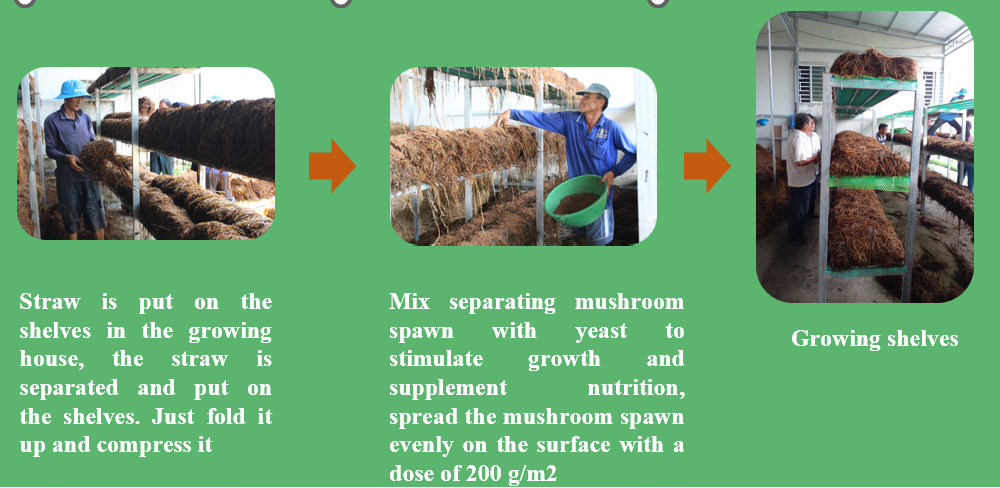
- Incubate the mycelium within 3 days, check the humidity and temperature in the net house regularly to control water spraying, and open the net house for ventilation
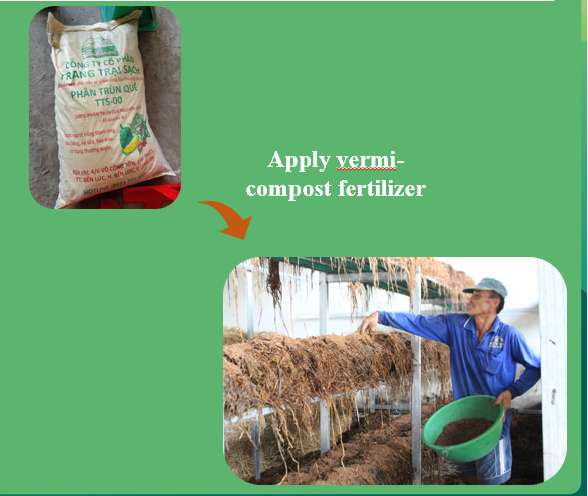
- After 3 days, apply vermicompost fertilizer, dose 2 kg/m2
Step 7: Caring and Watering
- During the incubation period, it is essential to monitor the temperature and humidity of the net house
+ The suitable temperature for the mycelium stage is 15-40°C, with humidity maintained at 50-70%
+ For the fruiting stage, the temperature should be 25-30°C, with humidity between 80-100%.
-
During this stage, the substrate does not require abundant moisture. If the temperature is high and the humidity is low, spraying mist in the net house is recommended.
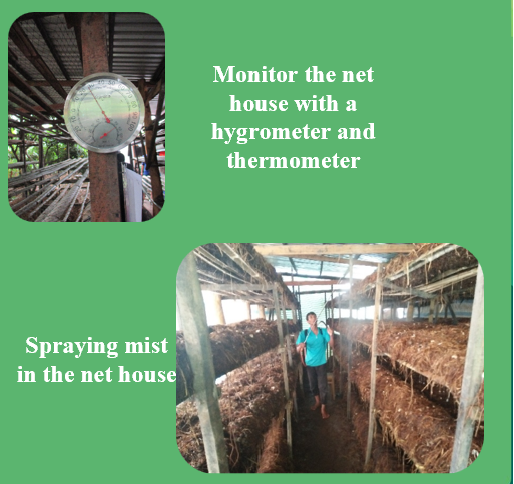
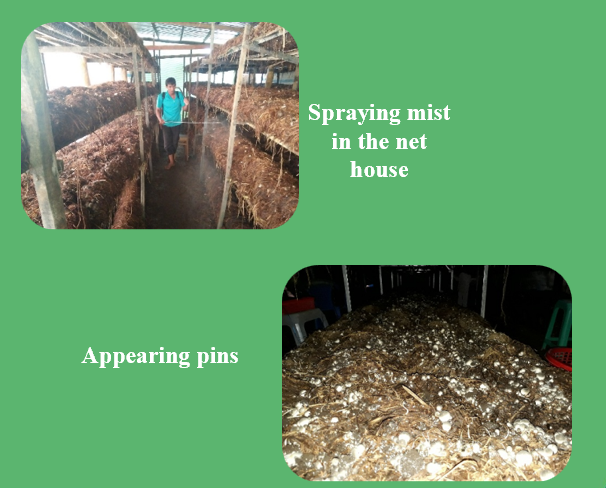
- After 7 days, ample water should be sprinkled to stimulate the mycelium to form fruiting bodies. When spraying water, it should be combined with lighting for 12 hours to aid in simultaneous fruit body formation
- Additionally, 0.05% sodium acetate (1 L/m2) can be added to promote better mushroom growth.
Step 8: Harvesting
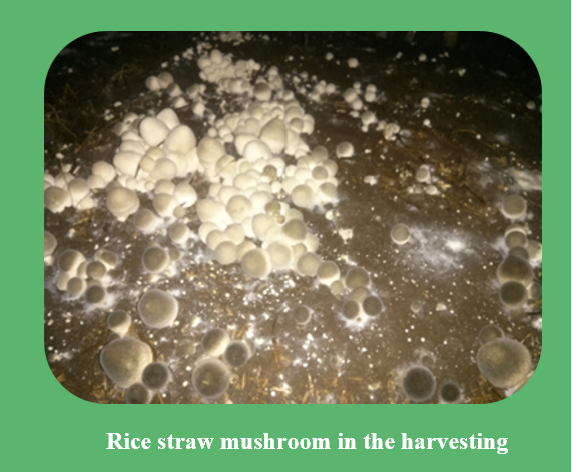
- Harvest straw mushrooms at the egg-shaped stage. Harvesting should be done twice a day, in the morning (5 – 6 am) and in the afternoon (5 pm – 6 pm), to ensure quality, productivity, and a high selling price.
- There are 2 harvests. The first harvest should be made within 4 days. Then, continue to care for the mushrooms as before for about 5-6 days, and the new mushrooms will begin to appear. The harvest will last about 3 days.
Step 9: Cleaning the net house
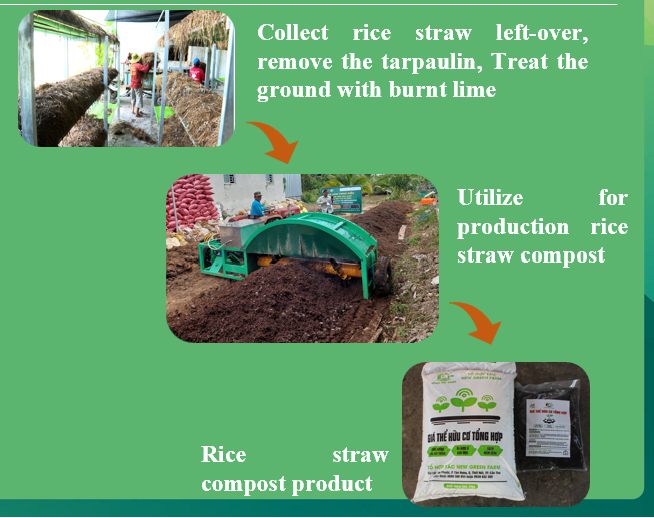
- After harvesting the mushrooms, the substrate can be composted as organic fertilizer to nourish the crop.
- Open the tarpaulin to ventilate the net house and use lime to eliminate bacteria. Quarantine the area for at least 1 month before planting the next crop
Refer to additional videos on indoor and outdoor mushroom cultivation.