Why it is necessary to improve straw management?
Current Issues
Straw Burning in Fields
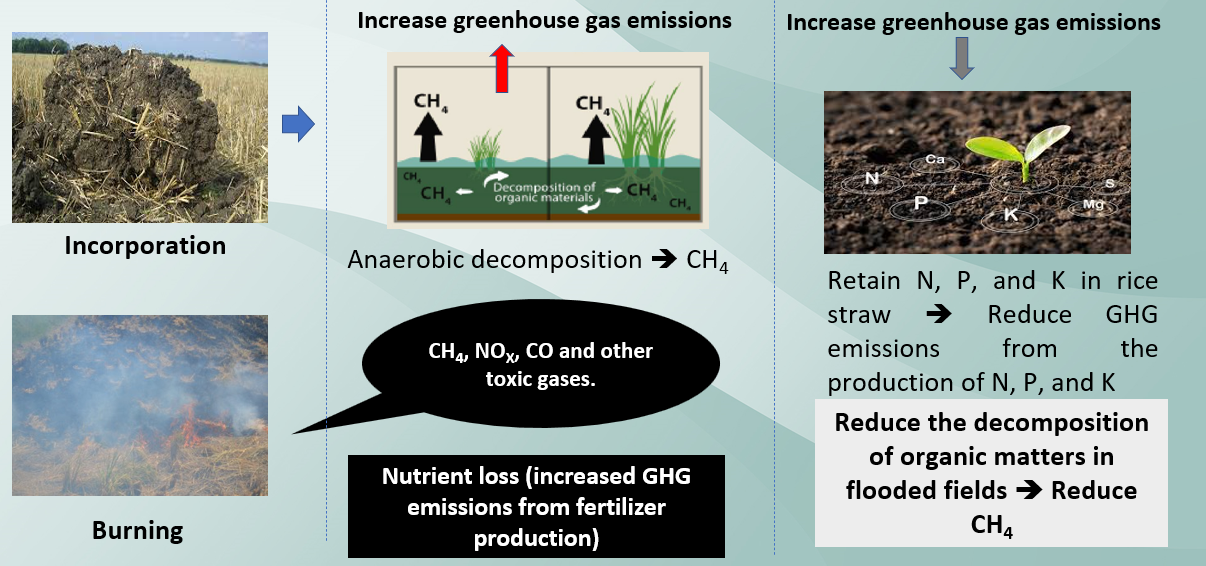
- Nutrient Loss
- Greenhouse Gas Emissions and Pollution
-
Loss of Biodiversity (Soil Microorganisms and Beneficial Fauna)
Straw Incorporation in Flooded Fields: Methane Toxicity, Black Root Rot Disease
How does straw management impact the carbon footprint?
Circular Economy from Rice Straw:
- No burning to ensure biodiversity and sustainability in rice cultivation.
- No incorporating rice straw in flooded fields to reduce methane (CH4) emissions.
- Rice straw is used in the production of mushroom, livestock feed, and biofertilizer/compost.
Watch the video to learn more about “Sustainable Straw Management for a Circular and Low-Emission Agriculture”
And “Production and Utilization of Rice Straw Pots”
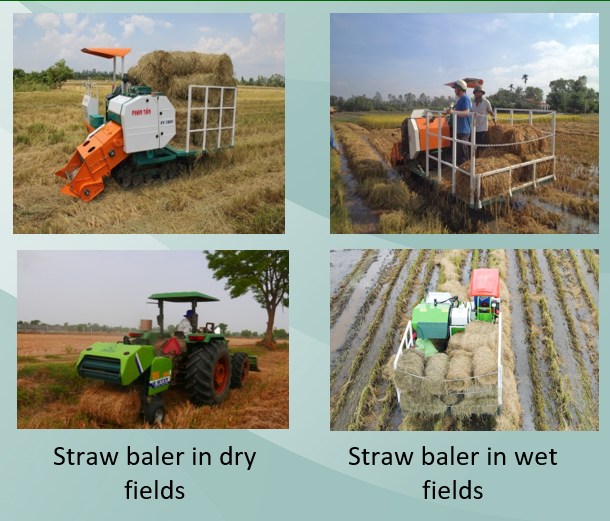
Mechanized rice straw collection and removal from the field
Collecting rice straw for mushroom cultivation and compost production can reduce greenhouse gas emissions by over 20% compared to incorporating straw into flooded fields.