Tại sao cần cải thiện quản lý rơm rạ?
Các vấn đề thực trạng
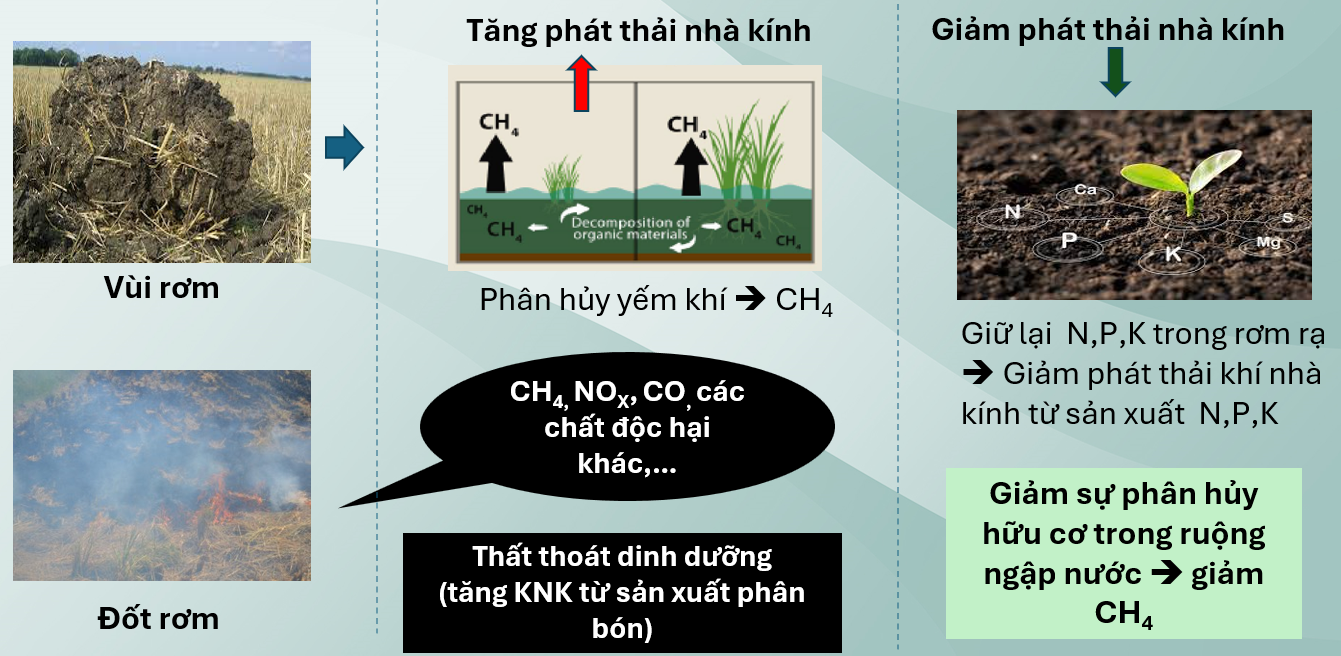
Đốt rơm trên đồng
- Thất thoát dinh dưỡng
- Khí thải và ô nhiễm
- Mất đa dạng sinh học (các sinh vật sống trong đất như nấm, vi khuẩn và động vật có lợi)
Vùi rơm rạ vào ruộng ngập nước: Nhiễm độc khí Metan, bệnh đen rễ
Quản lý rơm rạ tác động như thế nào đến dấu chân các-bon ?
Kinh tế tuần hoàn từ rơm
- Không đốt rơm rạ để đảm bảo tính đa dạng sinh học và tính bền vững trong canh tác lúa
- Không vùi rơm rạ trên ruộng ngập nước để giảm phát thải khí Metan (CH4)
- Rơm rạ được sử dụng trong sản xuất nấm rơm, thức ăn gia súc, phân bón sinh học/phân hữu cơ
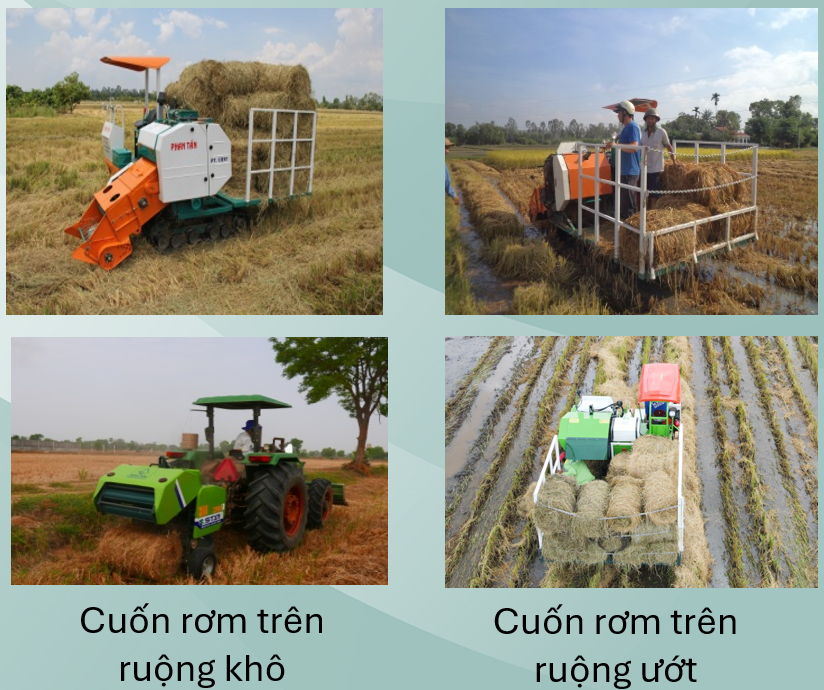
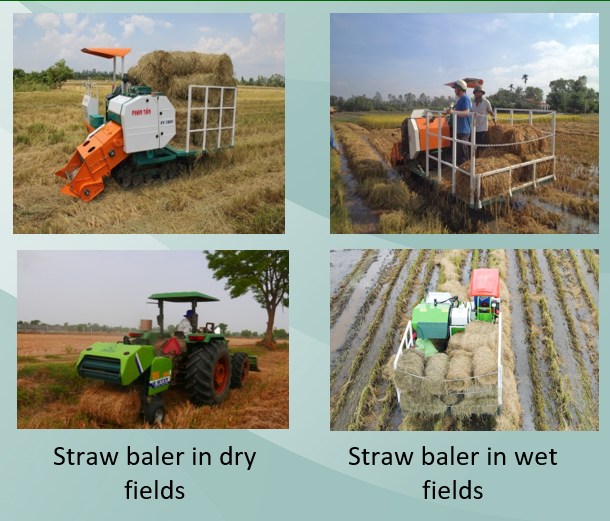
Cơ giới hóa thu gom rơm, mang rơm ra khỏi ruộng/thu gom rơm trên đồng ruộng
Thu gom rơm cho trồng nấm rơm, sản xuất phân hữu cơ rơm có thể giảm >20% lượng khí nhà kính so với vùi rơm rạ vào ruộng ngập nước
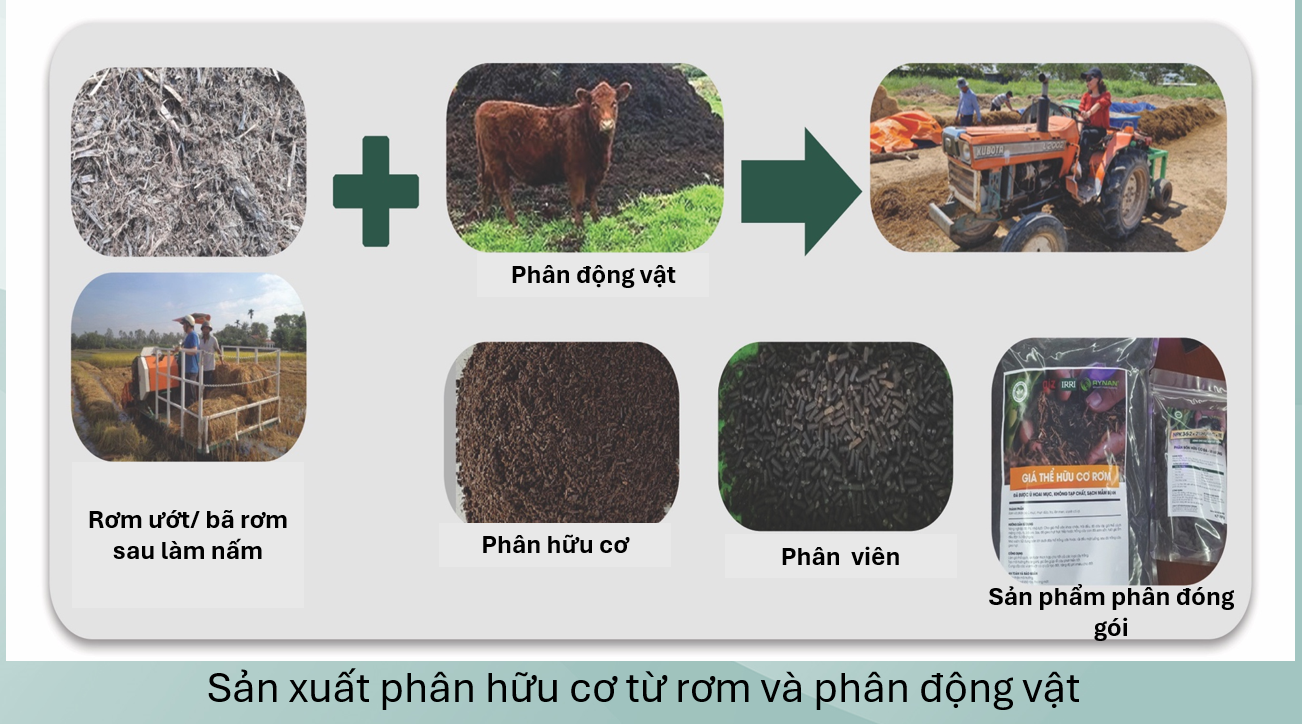
Ủ phân hữu cơ rơm không sử dụng phân động vật (Đối với những vùng không có sẵn phân động vật)
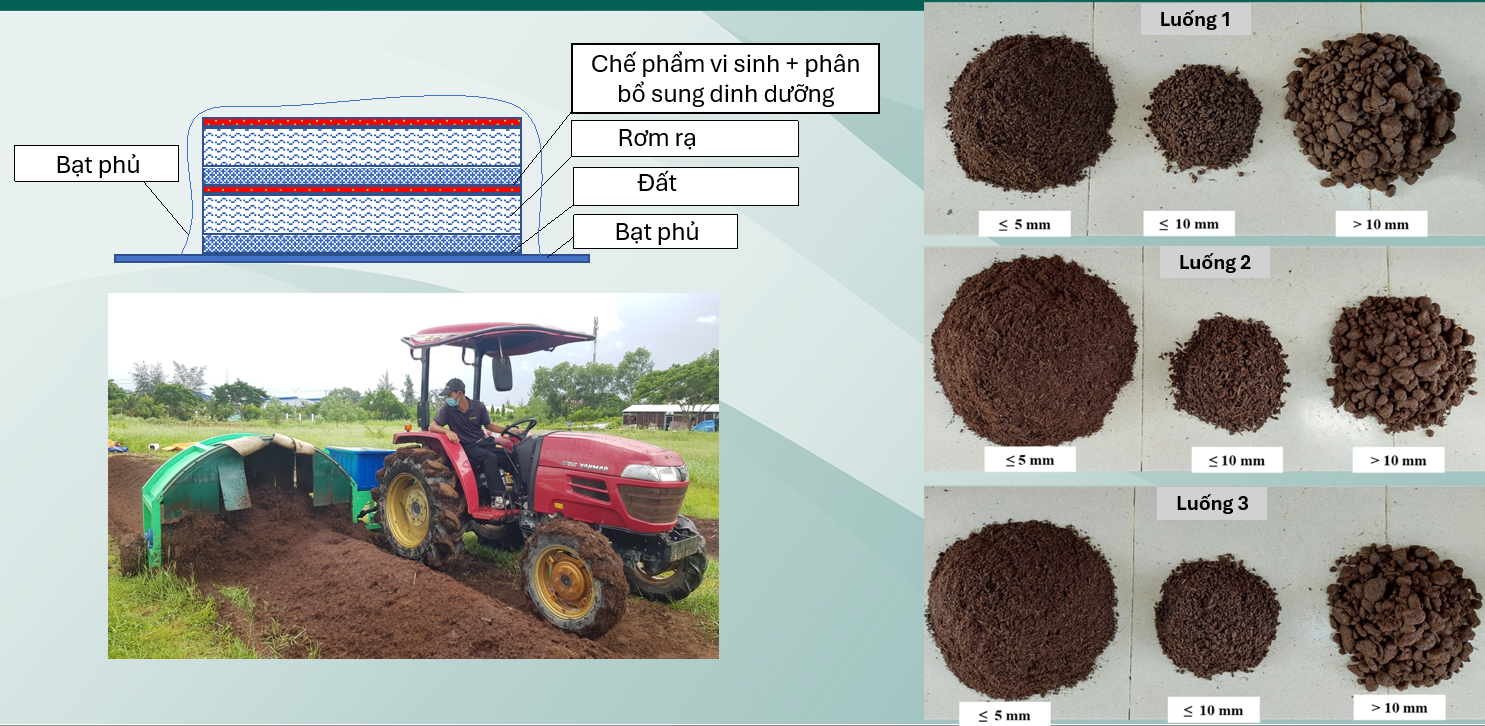
Các yếu tố ảnh hưởng đến quá trình ủ phân hữu cơ và chất lượng thành phẩm
- Tỷ lệ C/N
- Nhiệt độ, ẩm độ
- pH
- Men vi sinh
- Tối ưu hóa quá trình ủ (đảo trộn, phân hủy trong điều kiện hiếu khí, kết hợp với yếm khí)
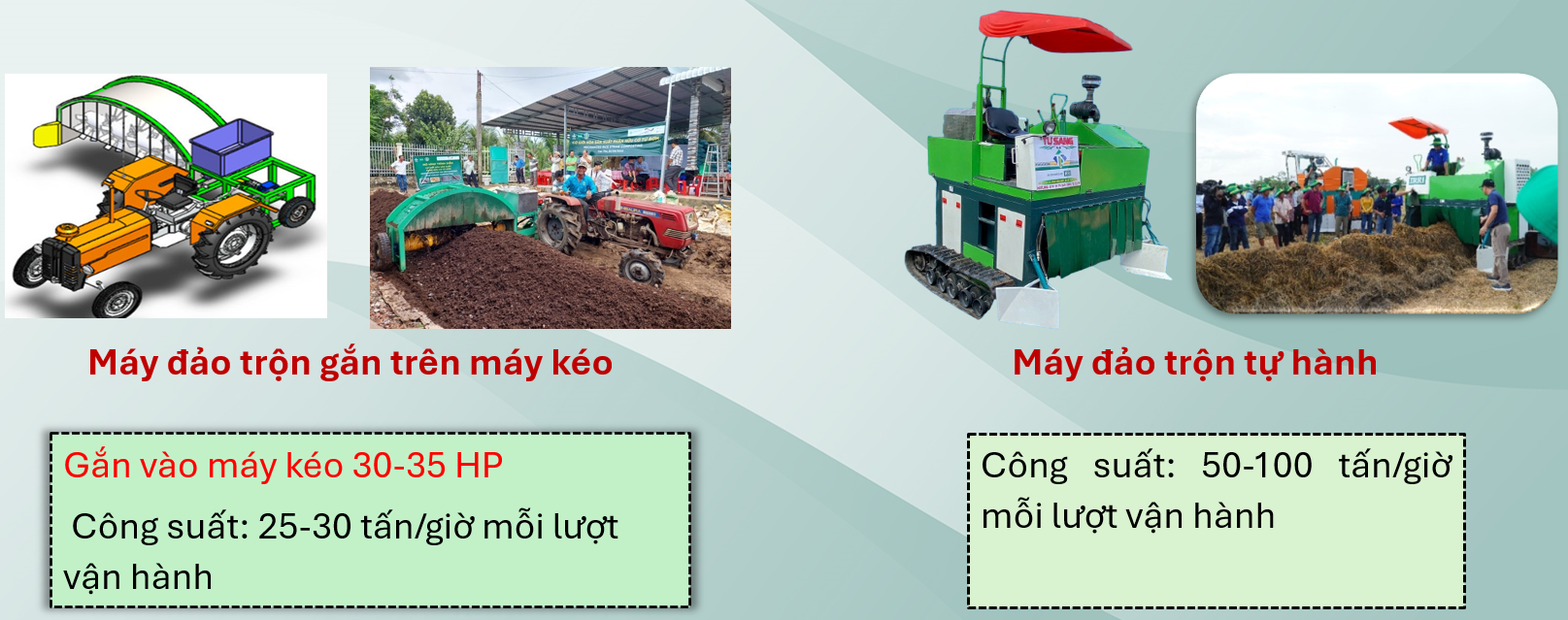
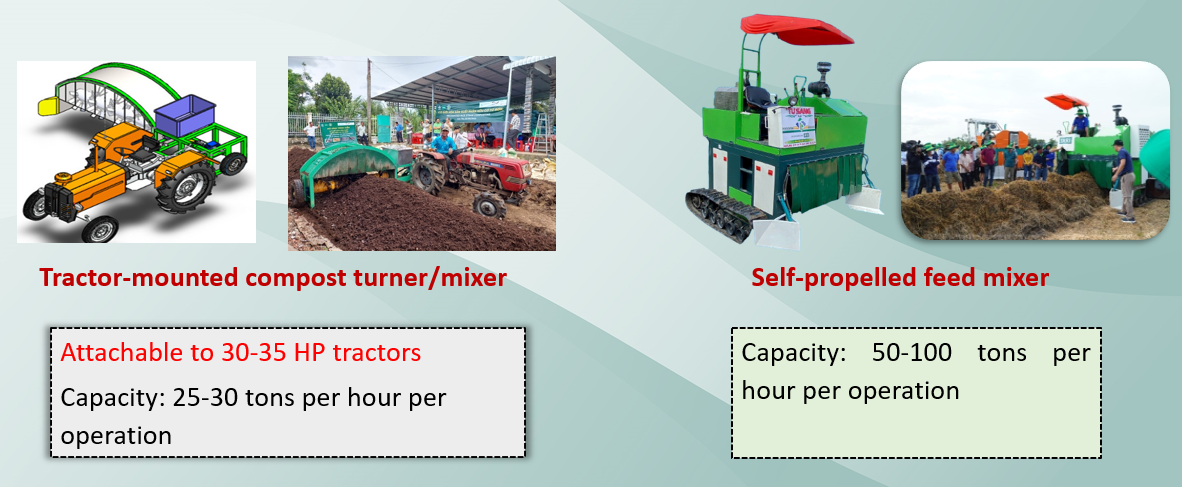
Máy đảo trộn phân hữu cơ (được phát triển bởi IRRI)
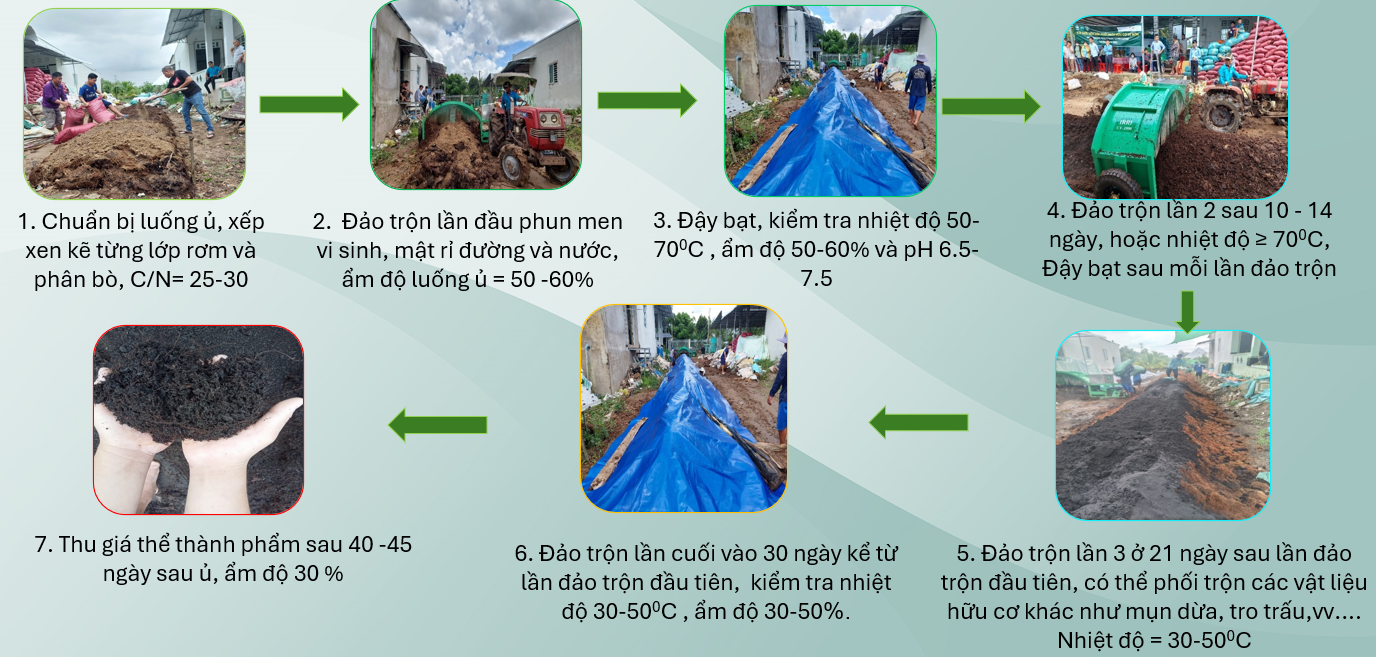
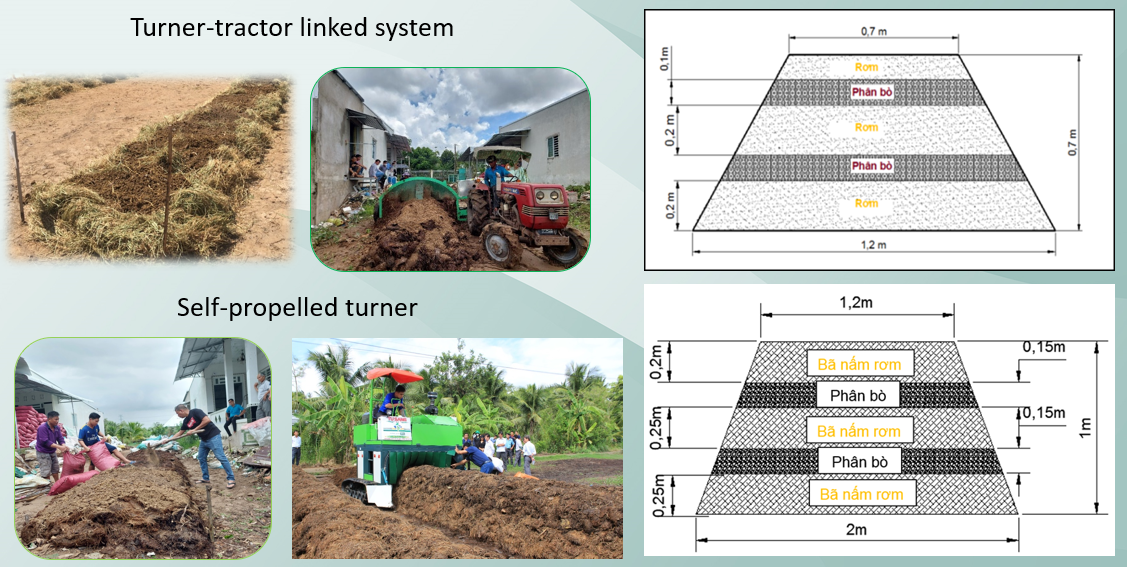
Quy trình ủ phân hữu cơ từ rơm
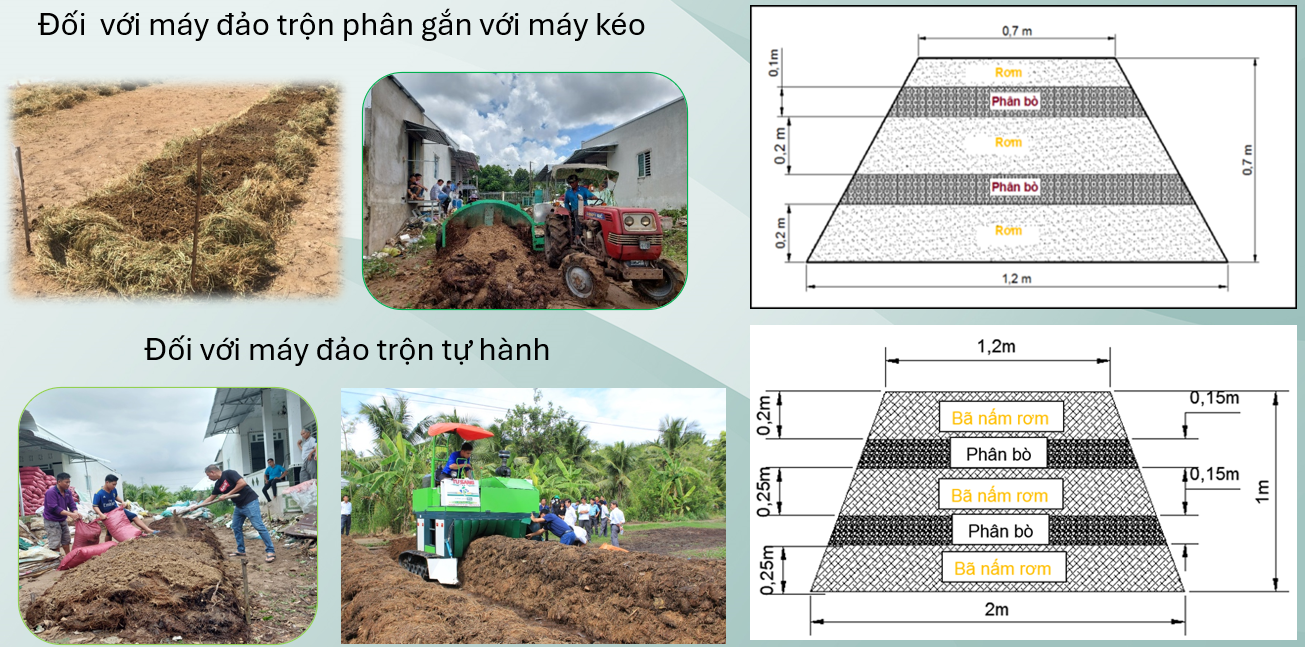
Chuẩn bị luống ủ rơm và phân động vật
Giá trị sử dụng của phân hữu cơ từ rơm
- Giá thể trồng hoa
- Bón phân hữu cơ từ rơm trên ớt
- Trồng dưa leo trên giá thể hữu cơ từ cơm
- Bón phân hữu cơ trên ruộng lúa
- Sử dụng bón trên vườn xoài
- Sử dụng bón trên vườn sầu riêng
Phân hữu cơ viên
Thành phẩm sau ủ được nén ép thành dạng phân hữu cơ viên, tiện lợi trong việc sử dụng bón cho cây trồng
Các hoạt động liên quan đến quản lý cây trồng các-bon thấp
- Dấu chân các-bon: xem xét toàn bộ gói kỹ thuật, hạt giống, phân bón, phát thải từ đất, cơ giới hóa,vv…
- Quản lý nước ngập khô xen kẽ (AWD) giảm đáng kể lượng phát thải khí nhà kính (lên đến 45%)
- Cơ giới hóa gieo sạ chính xác (DSR) giúp giảm dấu chân Các-bon từ việc giảm đầu vào, ví dụ: hạt giống, phân đạm (N), và giảm phát thải từ việc bón phân đạm, 10-15%
Current Issues
Straw Burning in Fields
- Nutrient Loss
- Greenhouse Gas Emissions and Pollution
-
Loss of Biodiversity (Soil Microorganisms and Beneficial Fauna)
Straw Incorporation in Flooded Fields: Methane Toxicity, Black Root Rot Disease
How does straw management impact the carbon footprint?
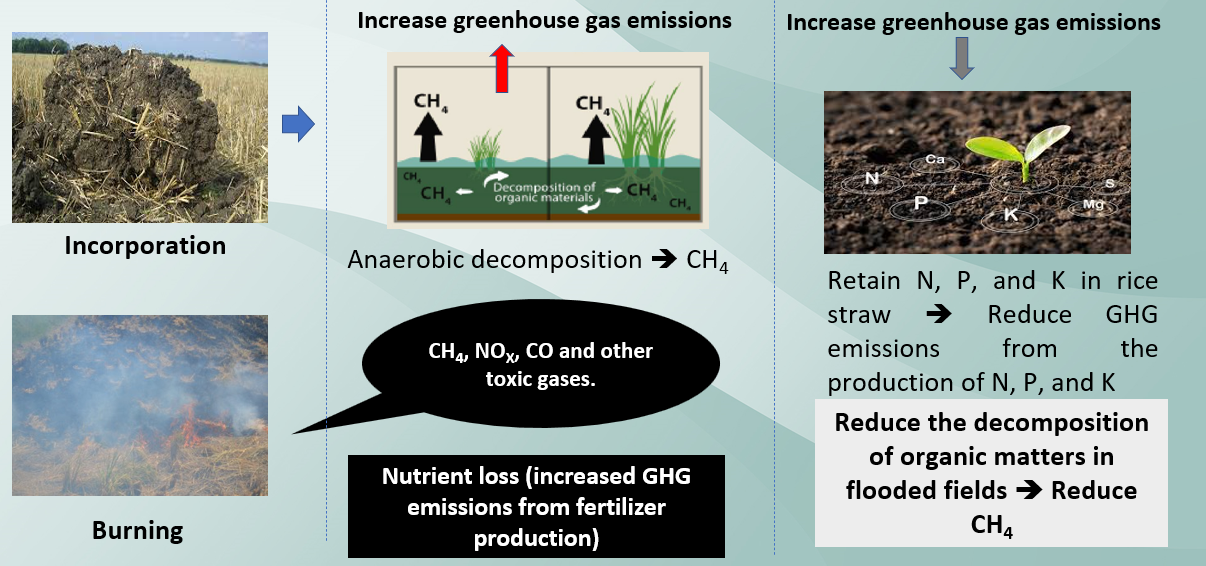
Circular Economy from Rice Straw:
- No burning to ensure biodiversity and sustainability in rice cultivation.
- No incorporating rice straw in flooded fields to reduce methane (CH4) emissions.
- Rice straw is used in the production of mushroom, livestock feed, and biofertilizer/compost.
Watch the video to learn more about “Sustainable Straw Management for a Circular and Low-Emission Agriculture”
And “Production and Utilization of Rice Straw Pots”
Mechanized rice straw collection and removal from the field
Collecting rice straw for mushroom cultivation and compost production can reduce greenhouse gas emissions by over 20% compared to incorporating straw into flooded fields.
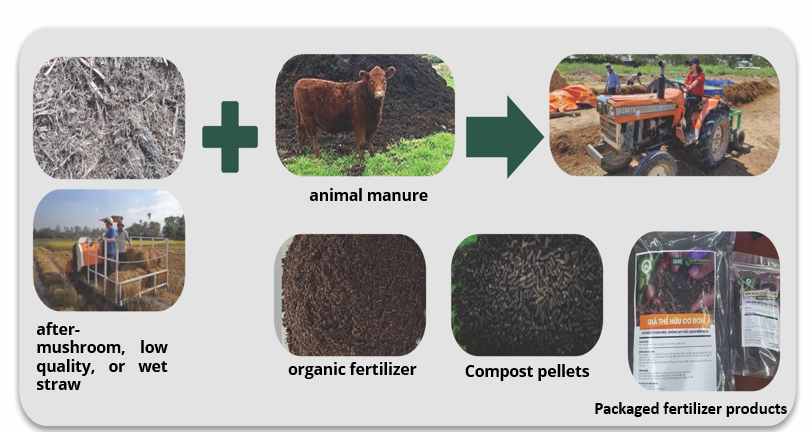
Composting rice straw without using animal manure (for regions where animal manure is not readily available)
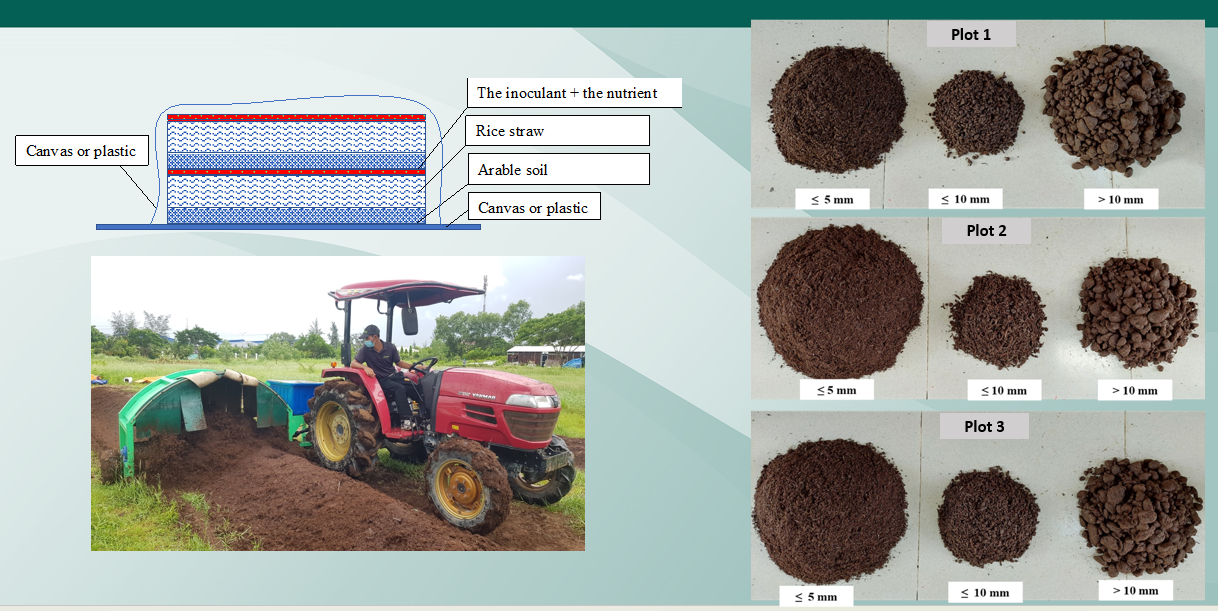
Factors Affecting the Composting Process and the Quality of the Final Product
- C/N ratio
- Temperature and humidity
- pH
- Microorganisms
- Optimizing the composting process (turning, decomposing in aerobic and anaerobic conditions)
Organic Compost Turner (developed by IRRI)
Composting Process

Preparing the composting bed and animal manure
Benefits of Rice Straw Compost
- Flower growing media
- Applying rice straw compost for chili peppers
- Growing cucumbers in growing medium
- Applying rice straw compost to rice fields
- Applying rice straw compost to mango orchards
- Applying rice straw compost to durian orchards
Compost pellets
The compost is pelletized for ease of handling and fertilizing
Activities related to low-carbon crop management
- Carbon footprint: Considering the entire technical package, including seeds, fertilizers, soil emissions, mechanization, etc.
- Alternate wetting and drying (AWD) significantly reduces greenhouse gas emissions (up to 45%).
- Mechanized direct seeding (DSR) helps reduce the carbon footprint by lowering input use, such as seeds and nitrogen (N) fertilizer, and reducing emissions associated with nitrogen fertilizer application by 10-15%.
Learn more about the technical process of producing fertilizer from rice straw