Why it is necessary to improve straw management?
Current Issues
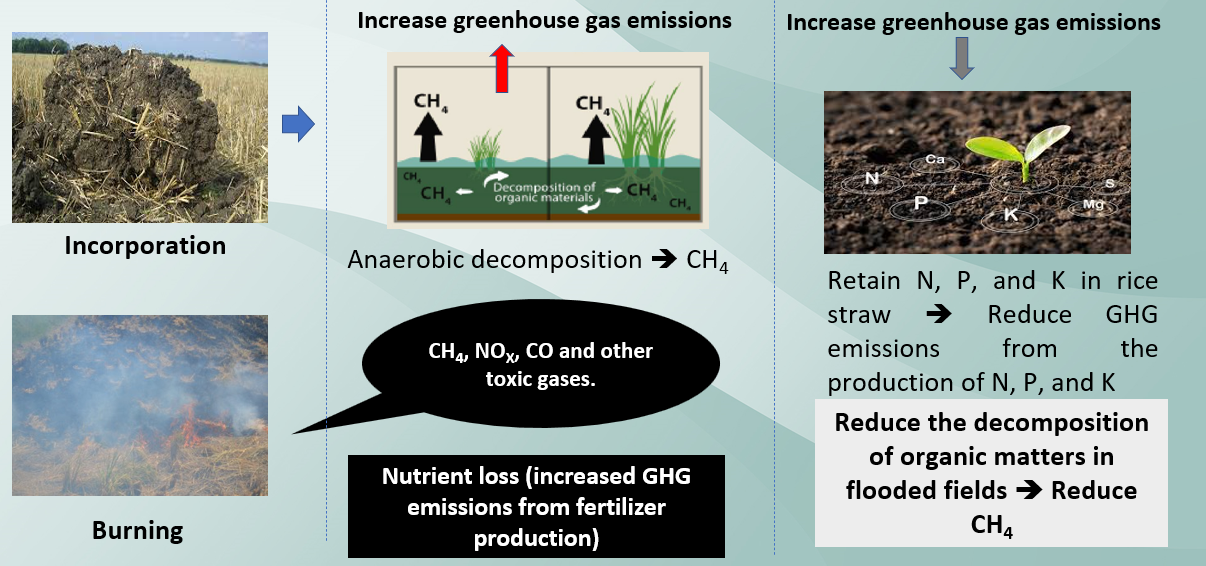
Straw Burning in Fields
- Nutrient Loss
- Greenhouse Gas Emissions and Pollution
-
Loss of Biodiversity (Soil Microorganisms and Beneficial Fauna)
Straw Incorporation in Flooded Fields: Methane Toxicity, Black Root Rot Disease
How does straw management impact the carbon footprint?
Circular Economy from Rice Straw:
- No burning to ensure biodiversity and sustainability in rice cultivation.
- No incorporating rice straw in flooded fields to reduce methane (CH4) emissions.
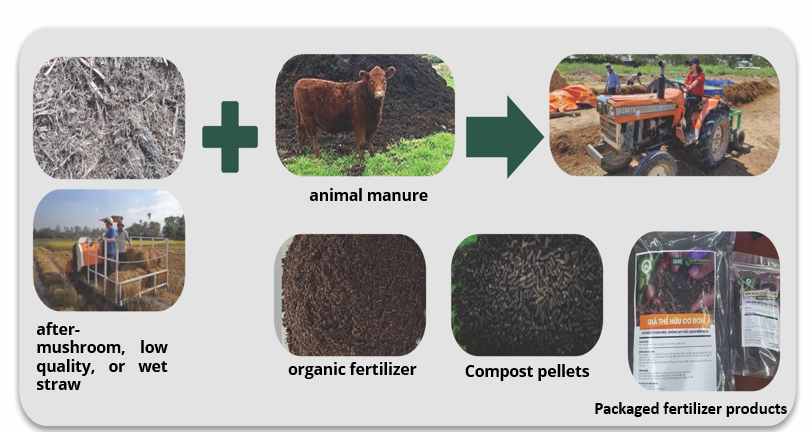
- Rice straw is used in the production of mushroom, livestock feed, and biofertilizer/compost.
Watch the video to learn more about “Sustainable Straw Management for a Circular and Low-Emission Agriculture”
And “Production and Utilization of Rice Straw Pots”
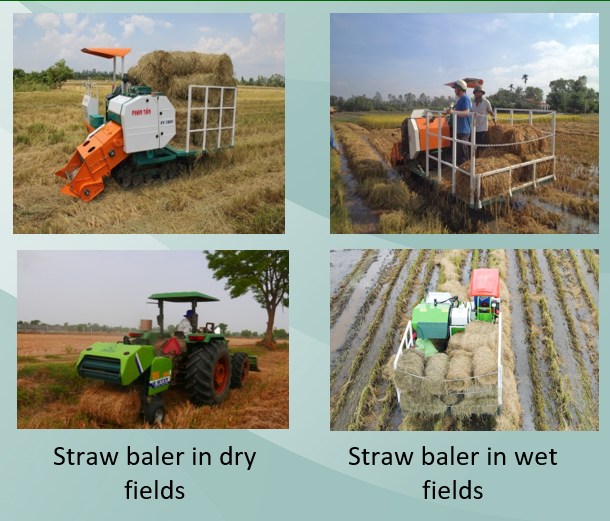
Mechanized rice straw collection and removal from the field
Collecting rice straw for mushroom cultivation and compost production can reduce greenhouse gas emissions by over 20% compared to incorporating straw into flooded fields.
Composting rice straw without using animal manure (for regions where animal manure is not readily available)
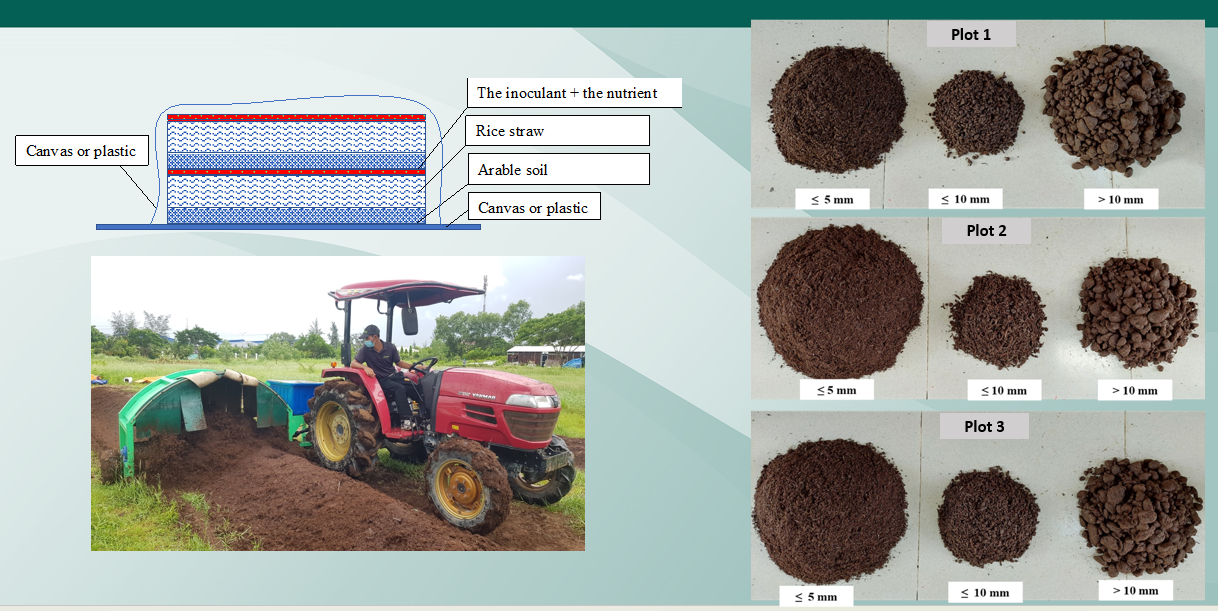
Factors Affecting the Composting Process and the Quality of the Final Product
- C/N ratio
- Temperature and humidity
- pH
- Microorganisms
- Optimizing the composting process (turning, decomposing in aerobic and anaerobic conditions)
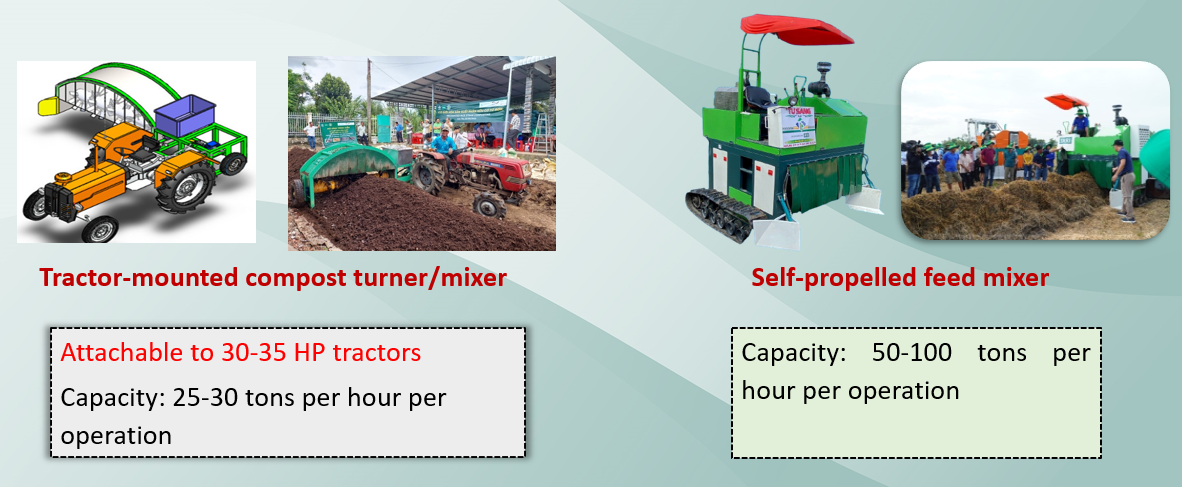
Organic Compost Turner (developed by IRRI)
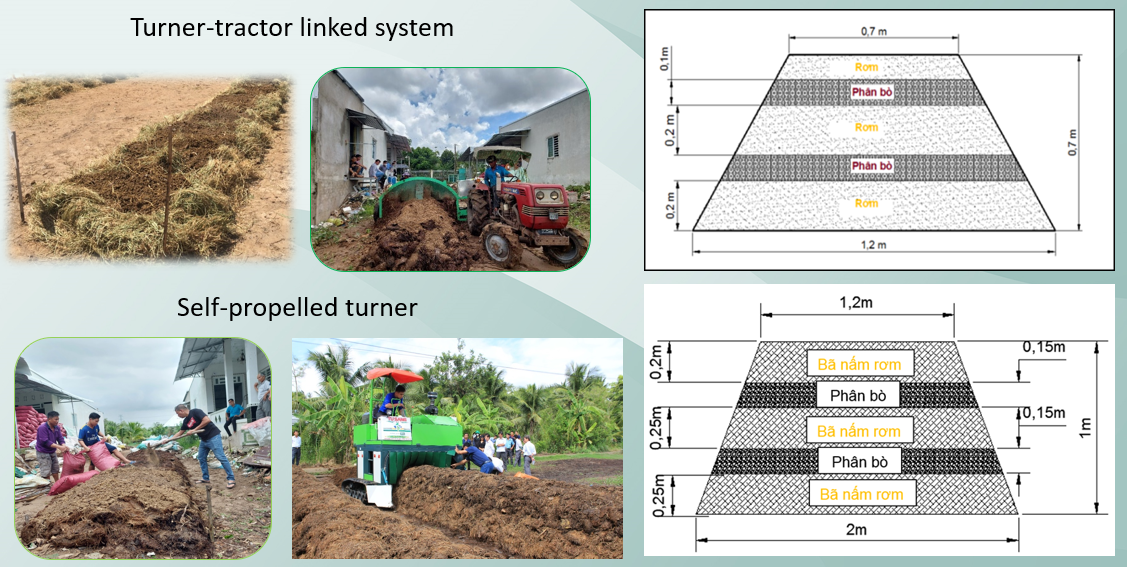
Composting Process

Preparing the composting bed and animal manure
Benefits of Rice Straw Compost
- Flower growing media
- Applying rice straw compost for chili peppers
- Growing cucumbers in growing medium
- Applying rice straw compost to rice fields
- Applying rice straw compost to mango orchards
- Applying rice straw compost to durian orchards
Compost pellets
The compost is pelletized for ease of handling and fertilizing
Activities related to low-carbon crop management
- Carbon footprint: Considering the entire technical package, including seeds, fertilizers, soil emissions, mechanization, etc.
- Alternate wetting and drying (AWD) significantly reduces greenhouse gas emissions (up to 45%).
- Mechanized direct seeding (DSR) helps reduce the carbon footprint by lowering input use, such as seeds and nitrogen (N) fertilizer, and reducing emissions associated with nitrogen fertilizer application by 10-15%.
Learn more about the technical process of producing fertilizer from rice straw