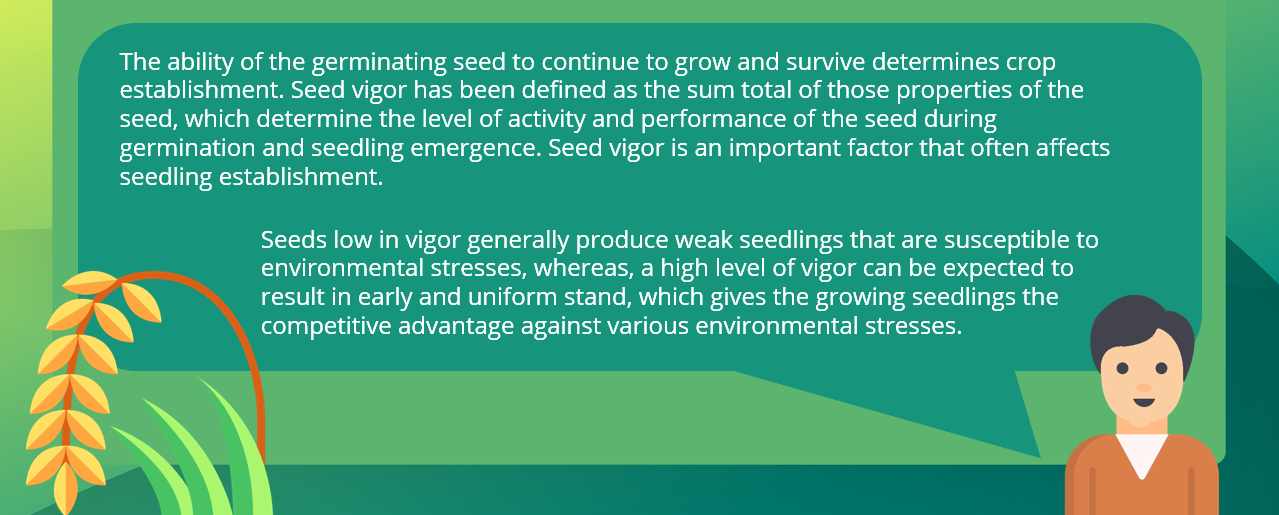
Seed characteristics
Seed quality is determined by a number of genetic and physiological characteristics. The genetic component involves differences between two or more genetic lines, while differences between seed lots of a single genetic line comprise the physiological component. The genetic factors that can influence quality include:

The physical or environmental characteristics include:
- Injury during planting and establishment
- Growing conditions during seed development
- Nutrition of the mother plant
- Physical damage during production or storage by either machine or pest
- Moisture and temperature during storage
- Age or maturity of seed

Deterioration in seed quality may begin at any point in the plant’s development stage from fertilization onward. Seed quality depends upon the physical conditions that the mother plant is exposed during its growth stages, as well as during harvesting, processing, storage, and planting.
Temperature, nutrients, and other environmental factors also affect seed development and influence seed quality.
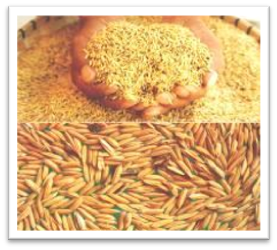
High-quality seed is the result of good production practices, which include:
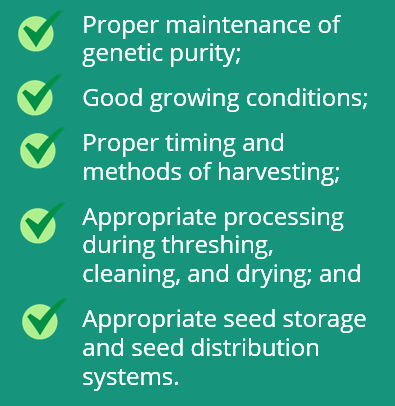
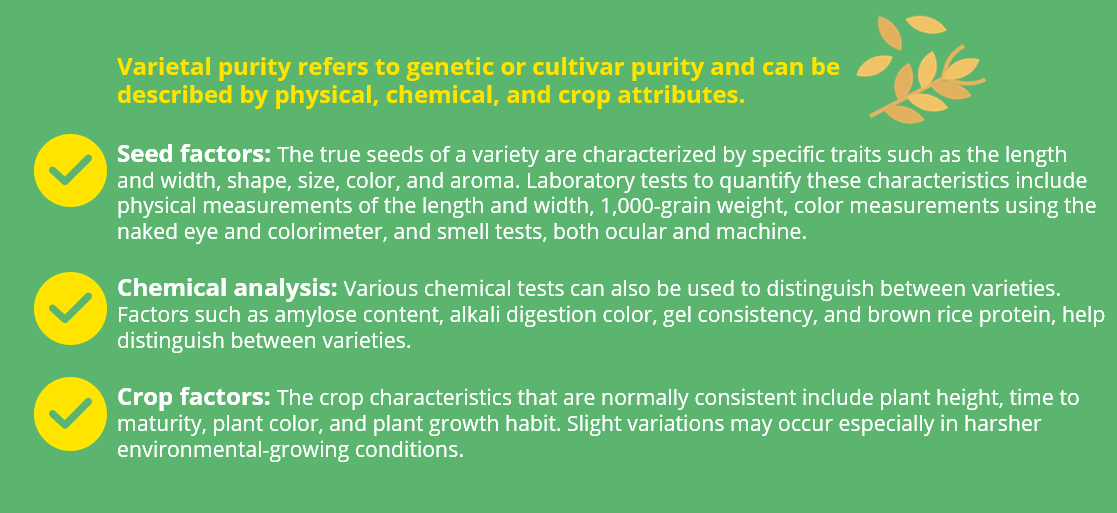
1. Varietal purity characteristics
2. Seedlot characteristics
A description of the seedlot includes the level of impurities, seed size, and damaged, deformed, or diseased seeds.
Impurities: The degree of contamination through weed seeds, seeds of other crops or species, and inert material, such as stones, dirt, or twigs are considered impurities. Impurity is expressed on a percentage basis by weight.
Seed size: Plumpness and/or fullness are generally desirable seed characteristics. These attributes indicate that the seed has the potential to produce vigorous seedlings under favorable conditions.
Damaged, deformed, or infected seed: Low-quality seed has seedborne diseases, insects, and other extraneous matter. High-quality seed should be free from various types of mechanical injury that reduce germination and seedling vigor.
Red rice: Red grains are not acceptable in the rice market place. Grains should not have more than 25% of their surface area colored red or red-streaked.
Seed viability: The viability of the seed in the field will be determined to a large degree from its stored moisture level, germination potential, and vigor.
Moisture content: This has a marked influence on the life and vigor of the seed. MC should be less than 14% for short-time storage and preferably less than 12% for extended storage times.
Germination percentage: This expresses the proportion of the total number of seeds that are alive. It is determined through controlled tests and actual counts of the number of seeds that germinate. Many varieties have a dormancy period immediately after harvest. Stored under traditional open systems, the germination rate of most rice seed begins to deteriorate rapidly
after 6 months.
Seed vigor: This quality characteristic provides a very good estimate of the potential field performance, and subsequently, the field-planting value. While the speed of germination varies slightly across varieties, seeds should imbibe (absorb) moisture and within 2 days produce a root (radicle) and the first leaf (plumule) within 4 days. At this point, the seed is considered to have germinated.