Land Preparation and Crop Establisment
Use registered seeds for planting
The source of seeds must be a foundation seed (for seed growers) or a certified seed (rice growers) from a Rice Research Center or a certified Seed Multiplication Center.
Registered seeds have better growth performance, stable yields, and preferred by both farmers and consumers.
- Apply organic fertilizer 5-10 t/ha before land preparation 1-2 weeks to provide soil nutrients for the rice plants and to keep the soil healthy.
- Allow decomposition of weeds, rice stubbles, and straw in the field. The time needed to sufficiently decompose the weeds and crop residues is about three weeks
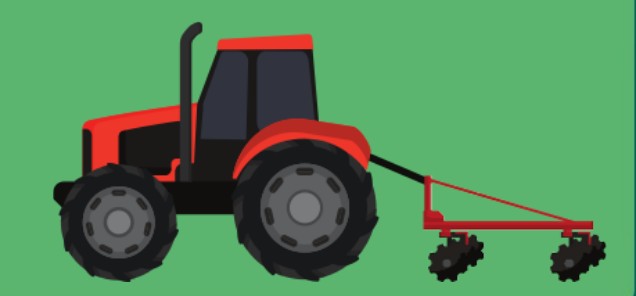
Plow the field while it is still dry
- Harrow the field twice with sufficient soil moisture followed by leveling. Allow a one-week interval for each operation.
- The first harrowing should be along the plowing direction and the second harrowing is along the crosswise direction
- After the final harrowing, level the field using wooden planks or other suitable materials.
Practice synchronous planting
- Plant within the recommended planting period to synchronize with other farmers. All fields must be planted within 30 days
- Use the recommended seeding rate (60 kg for transplanted rice), using transplanter is 70-80kg/ha,
- Prepare the seedbed area properly. Apply organic matter before land preparation. Weeds and crop residues should be properly decomposed or cleaned
- Produce rice seedlings in seedbeds that are 2m wide with length that follows the length of the field. Seedbeds have a distance of 30 cm apart.
- Sow pre-germinated seeds at 70 to 80 g/m2. Soak seeds for 24 hr and incubated for 24 to 48 hr depending on the variety and weather condition. Seeds are ready for sowing in the seedbed when the radicle has emerged.
- Transplant 12-15 days old seedlings for machine transplanter, 15 to 25 days old seedlings at 2-3 seedlings/hill for manual planting. Plant spacing is at 20 x 20 cm or 25 x 25 cm depending on the soil fertility.
- Seed Multiplication Groups or Seed Growers are not allowed to broadcast seeds during crop establishment.
- Replant missing hills within 7 days after transplanting
- Practice roguing four times at these critical stages: At maximum tillering, flowering stage, dough stage, and before harvesting to remove weeds, red rice, and other variety mixtures.

Important equipment for harvesting
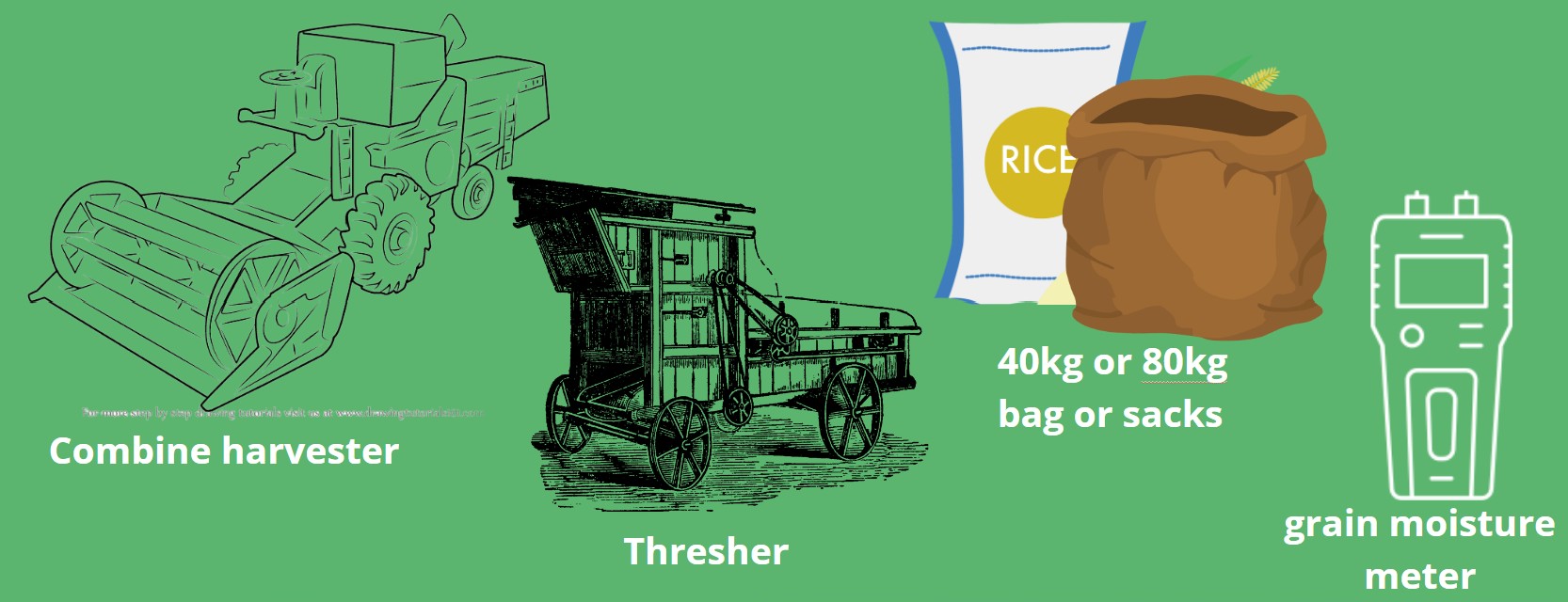
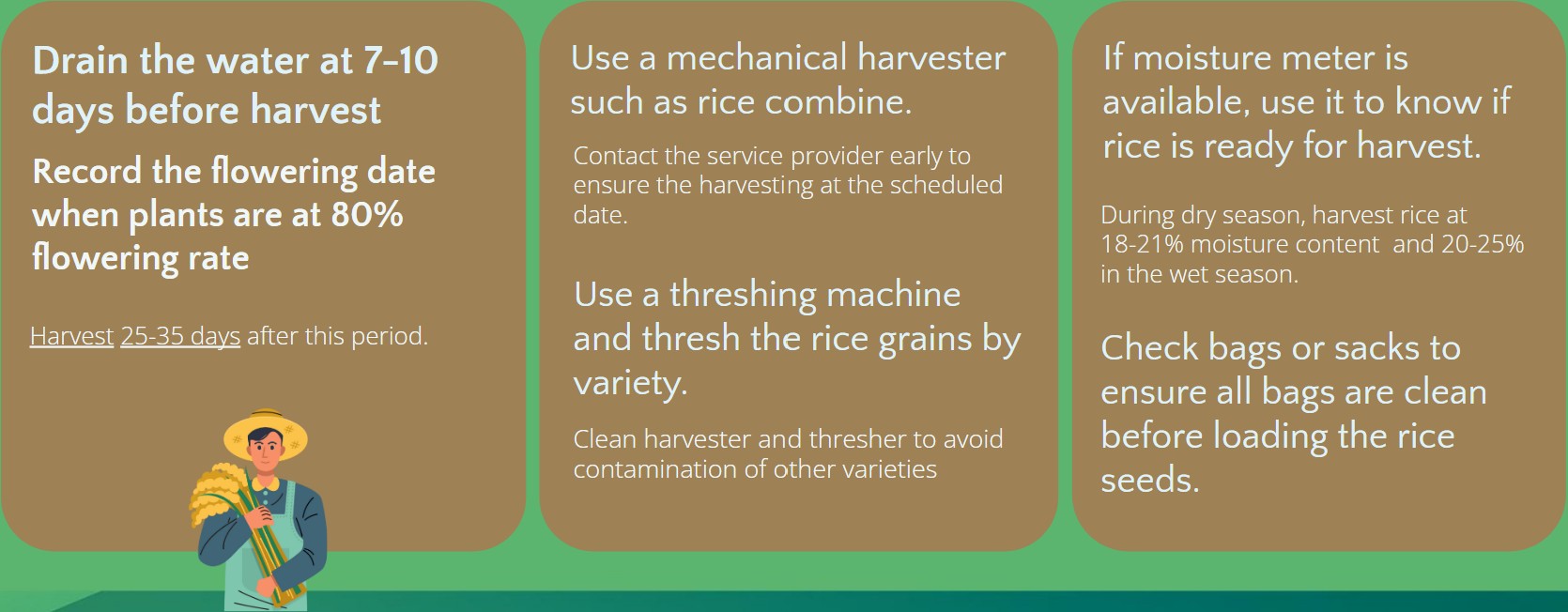
Important procedures for harvesting
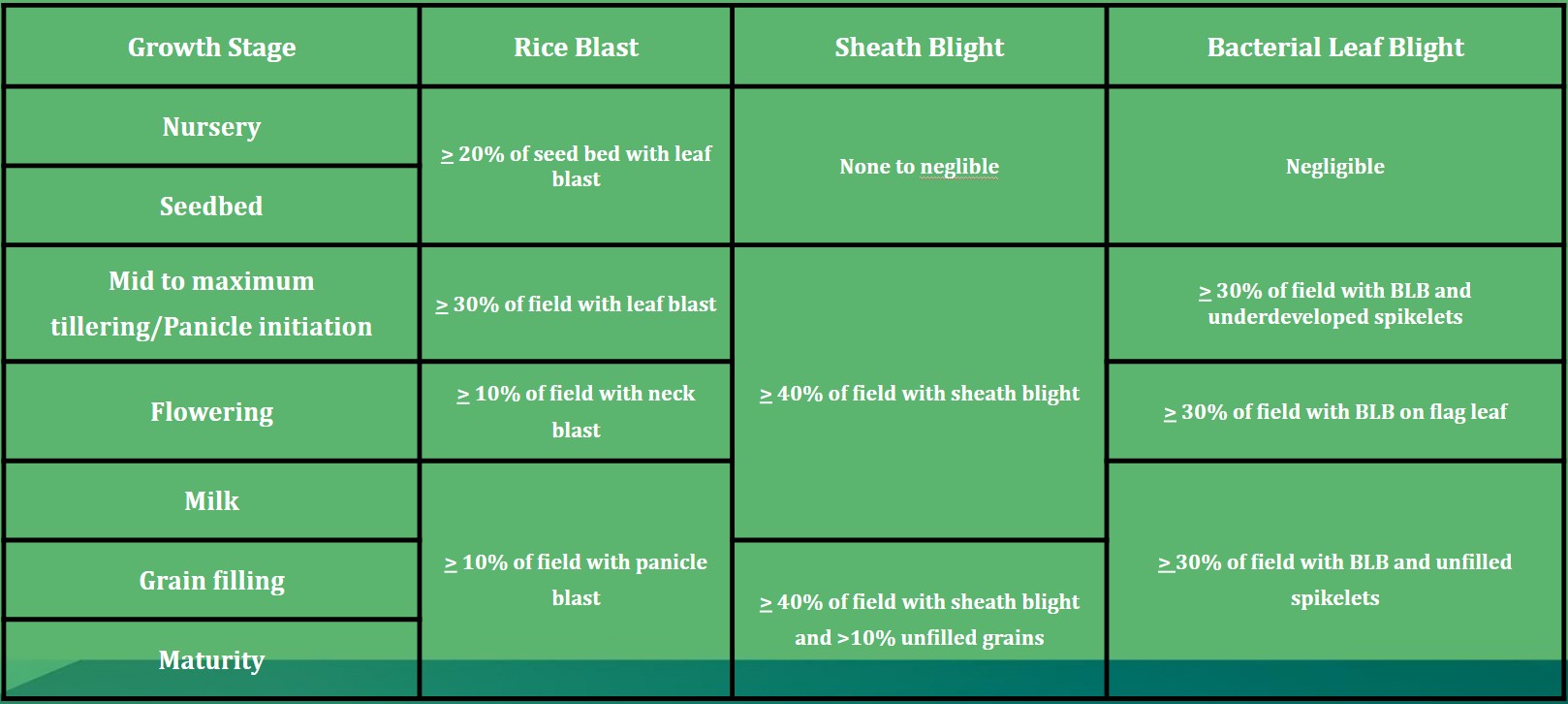
Major diseases associated with significant yield loss (for 120-day variety)
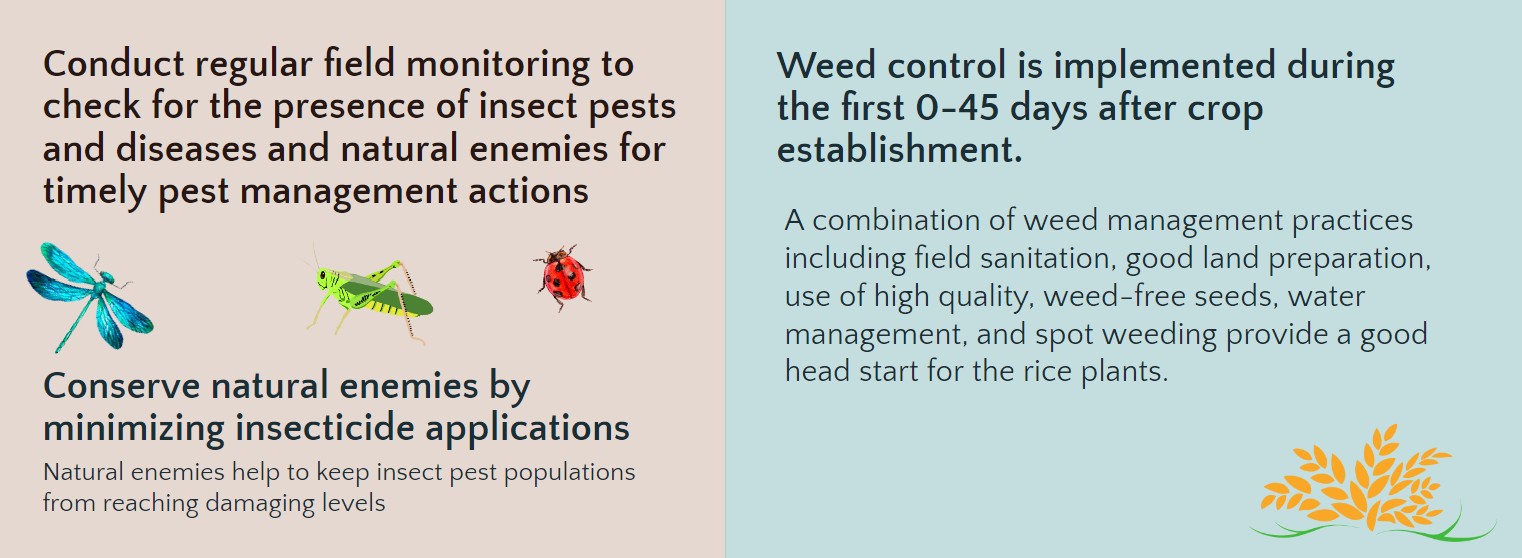
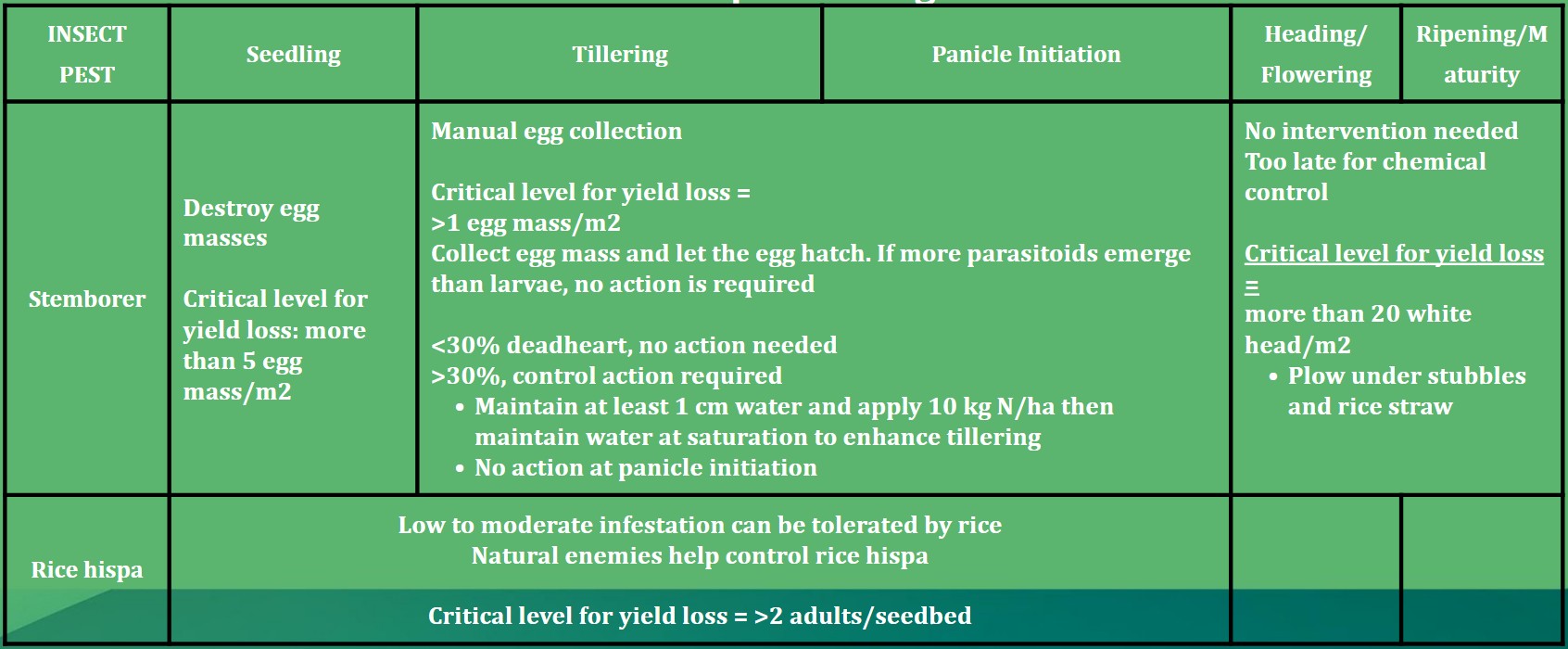
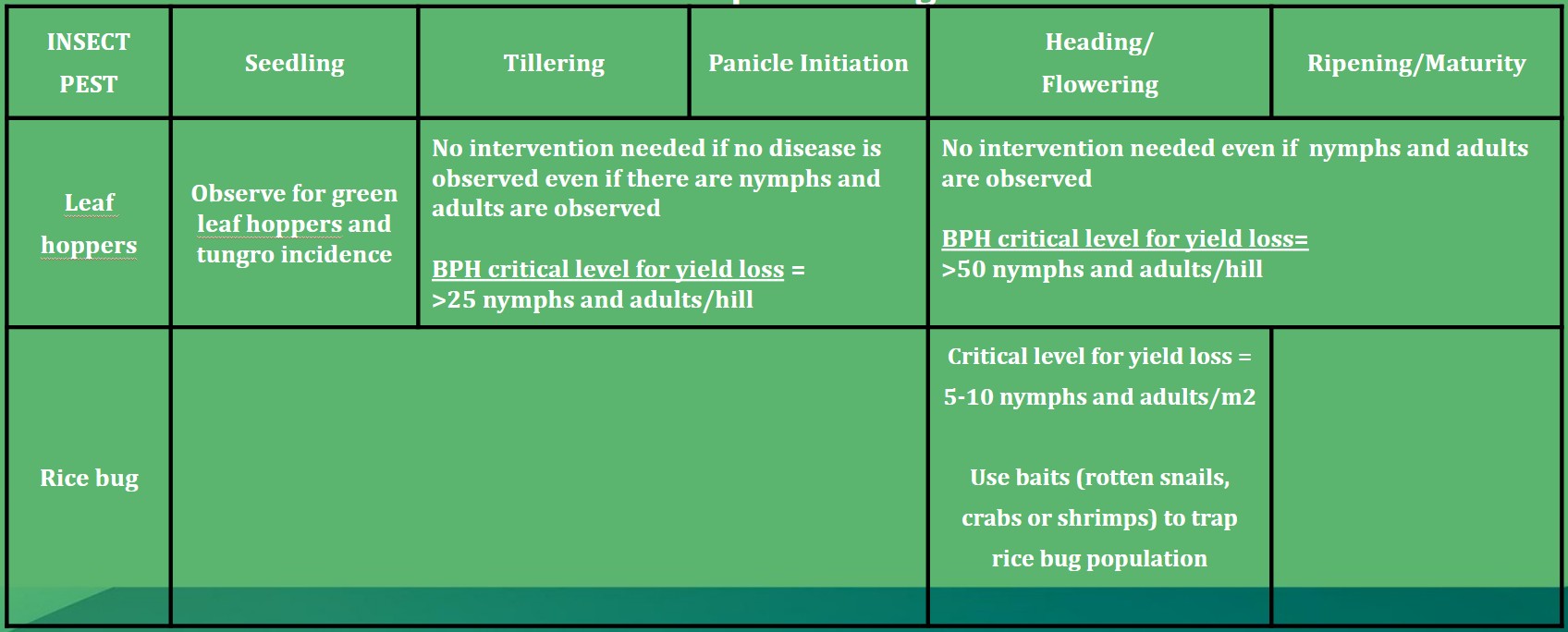
Major insect pests, critical levels, and management actions at each crop development stage
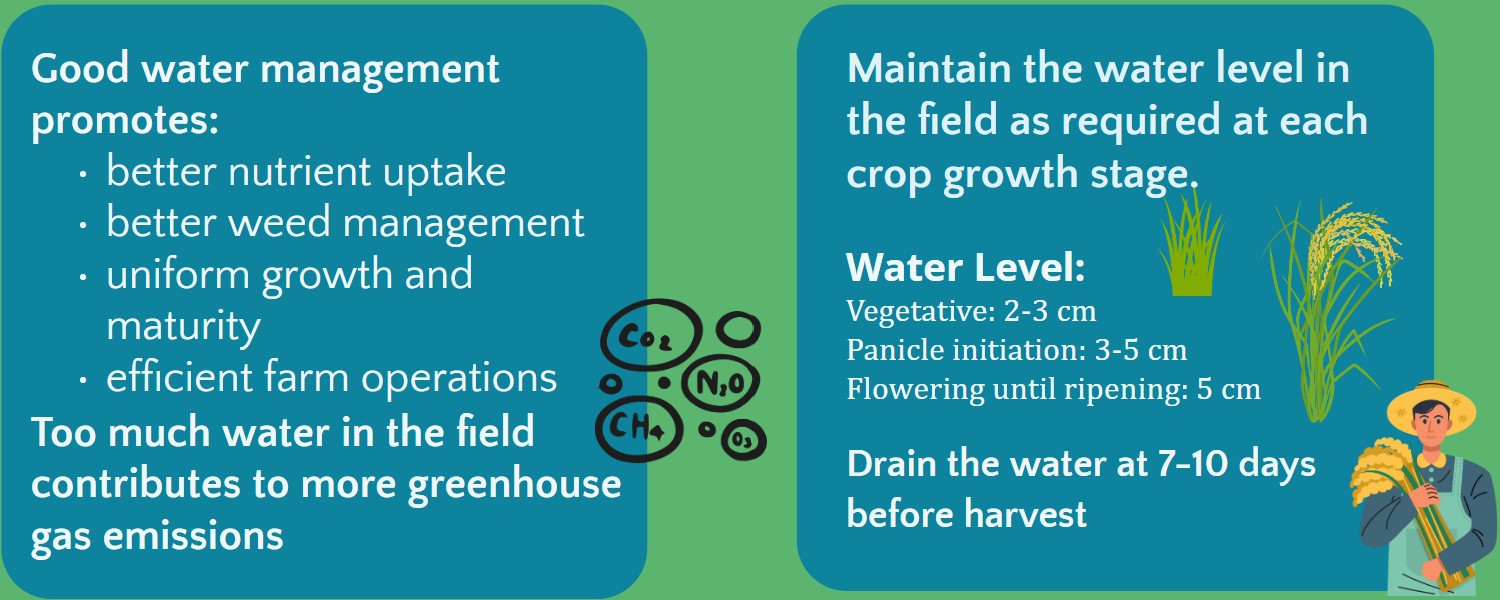
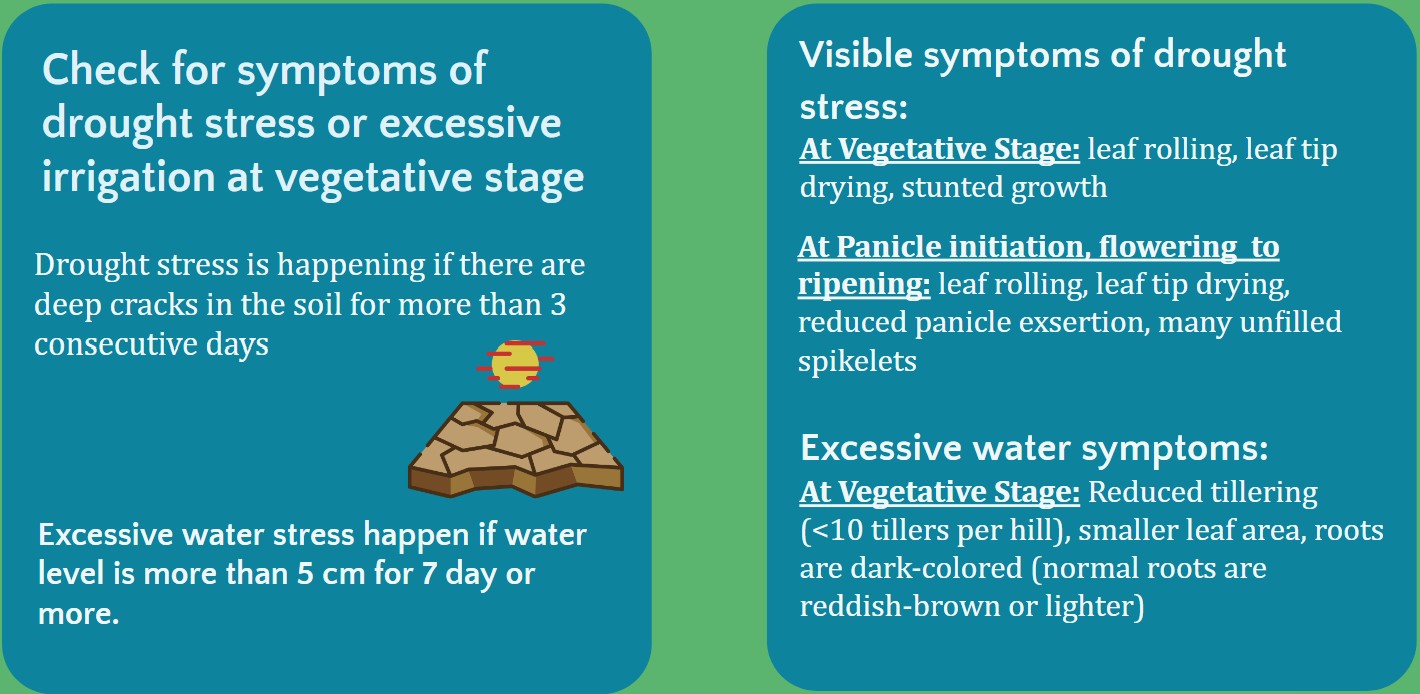
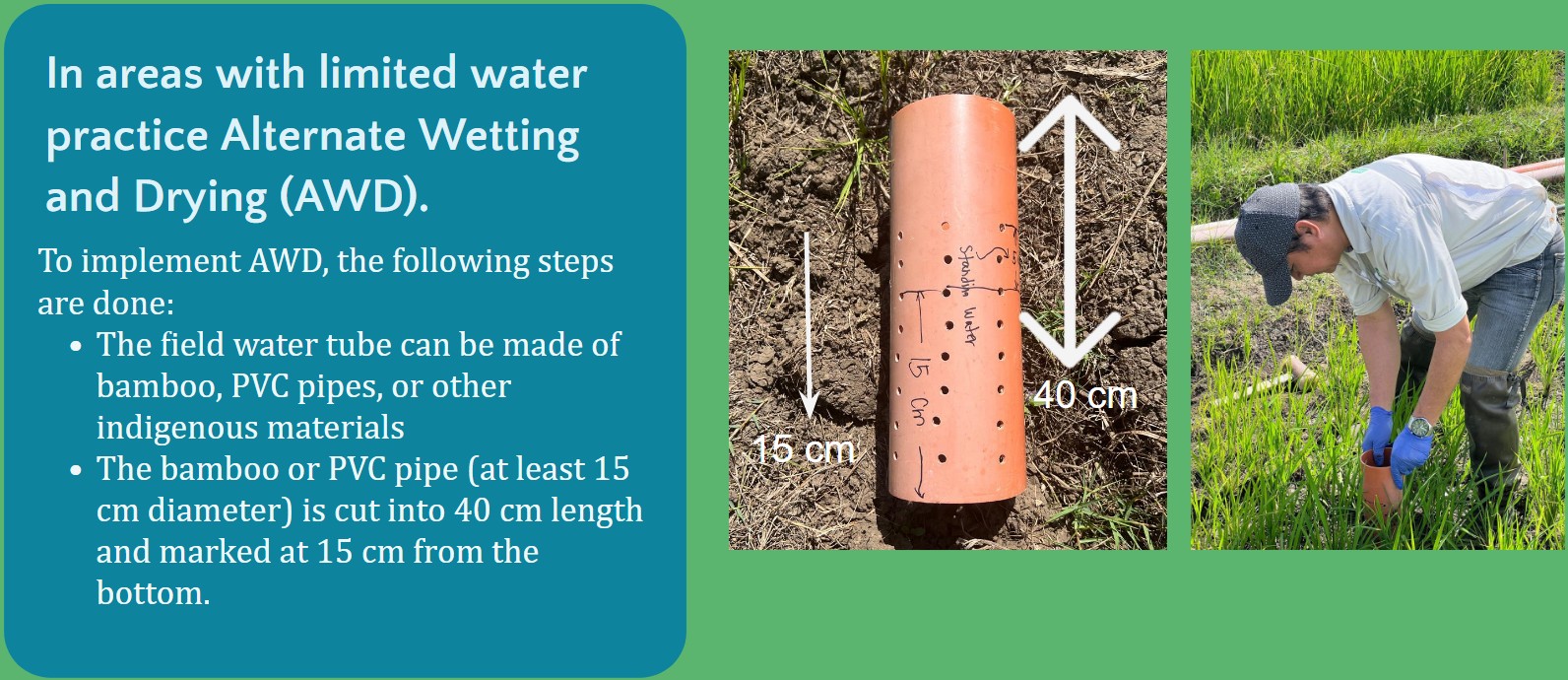
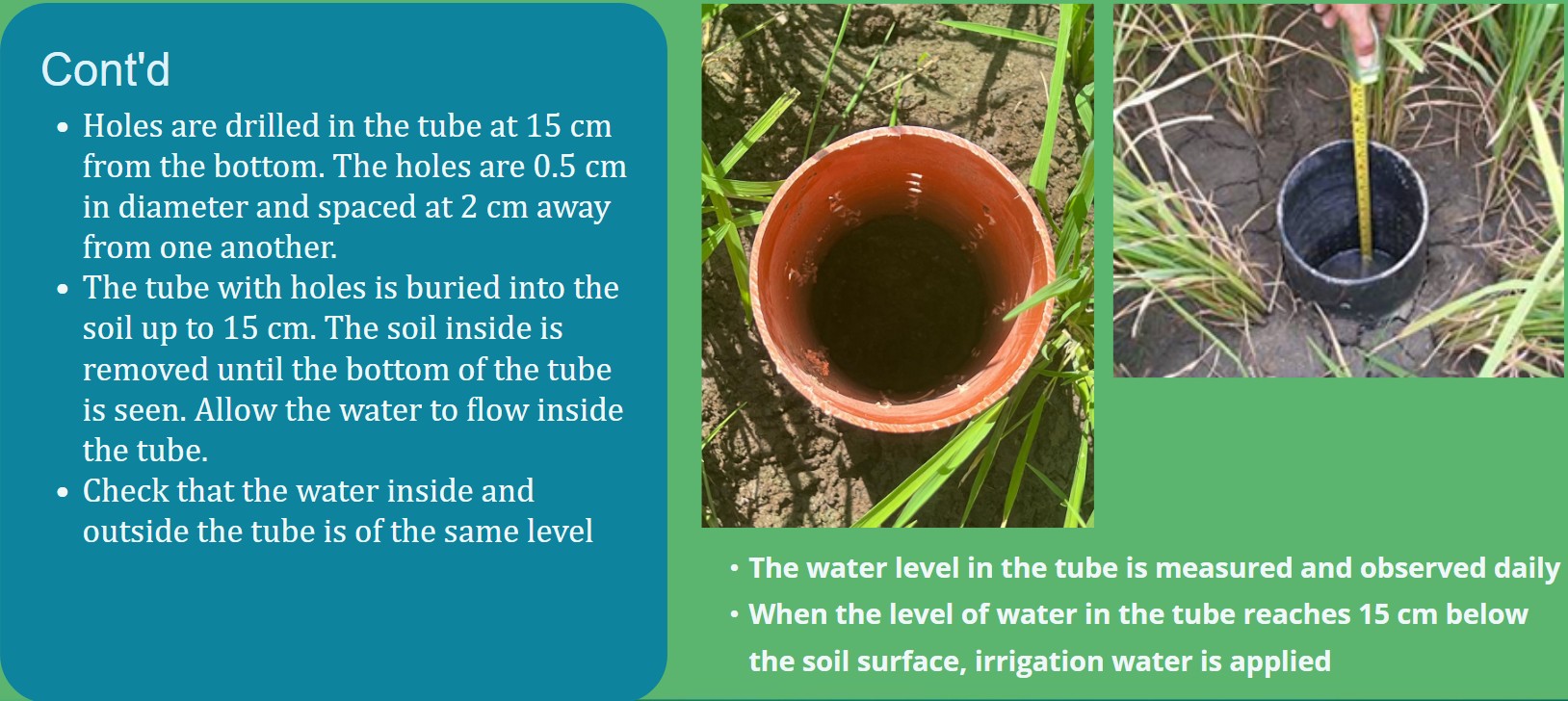
APPLY THE RIGHT VOLUME OF WATER WHEN NEEDED BY THE RICE PLANT
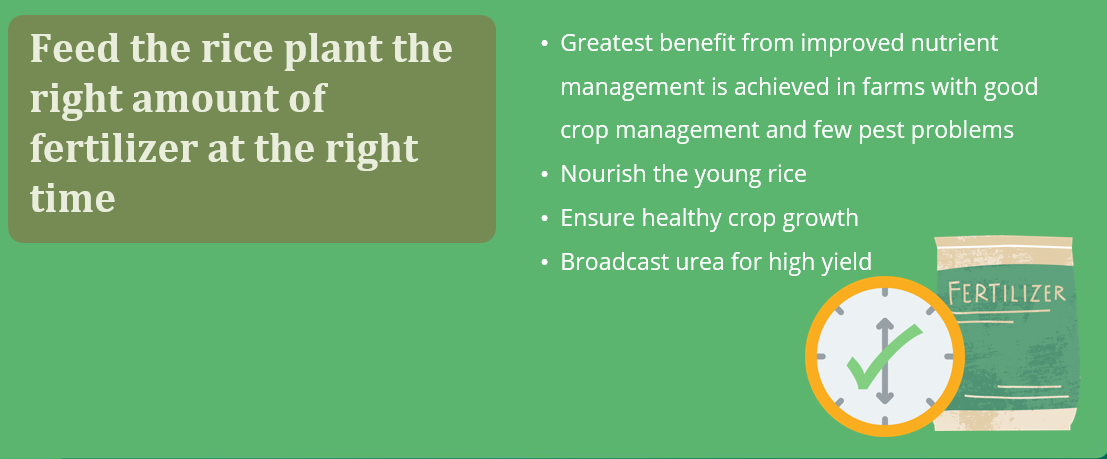
Aims of an efficient and cost-effective nutrient management
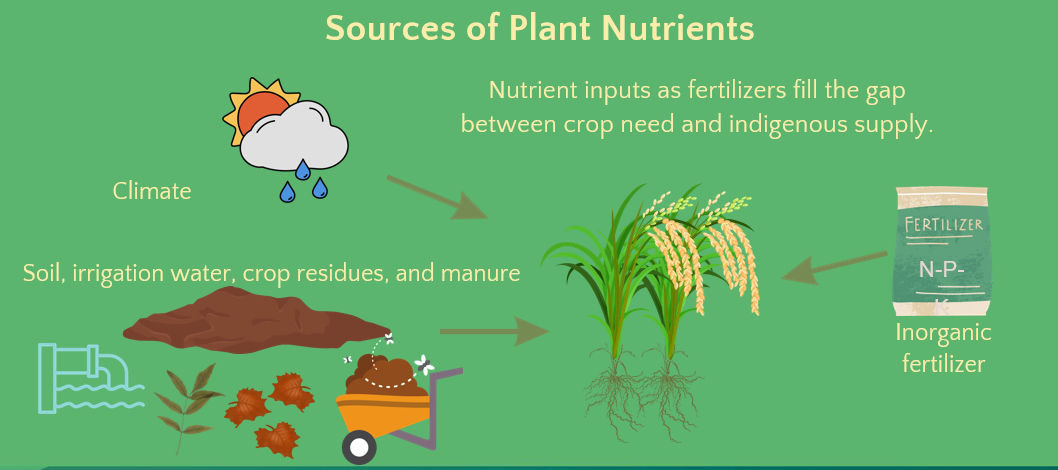
- Maximize nutrient uptake of crops through good crop management practices.
- Fully utilize nutrients regardless of source
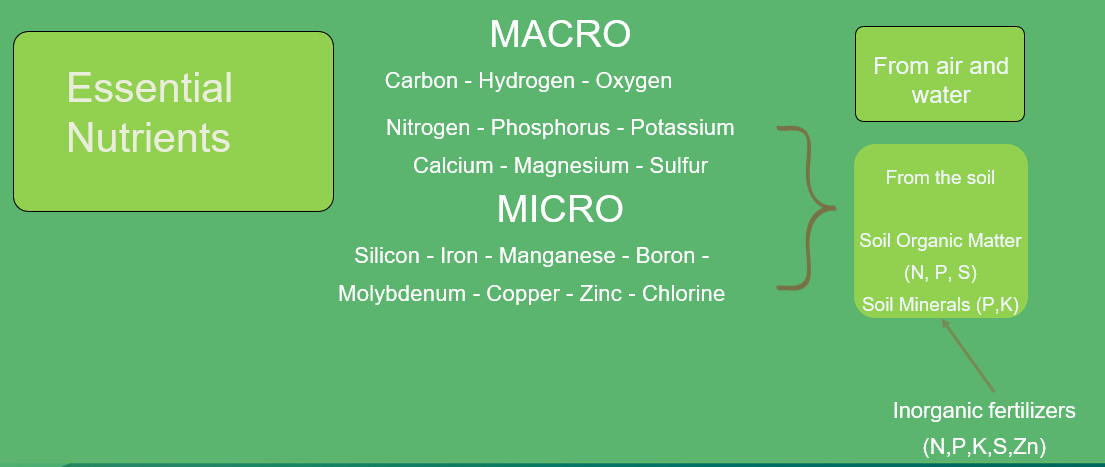
- Use mineral fertilizers as required to overcome specific nutrient limitations
A COST-EFFECTIVE AND EFFICIENT NUTRIENT MANAGEMENT
Minimize risk of crop failure by:
- Selecting realistic and economic yield targets
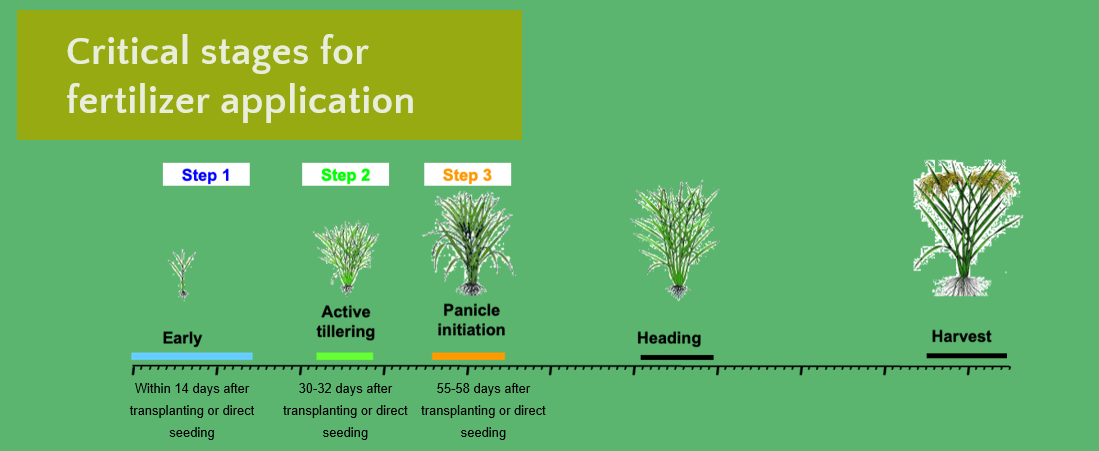
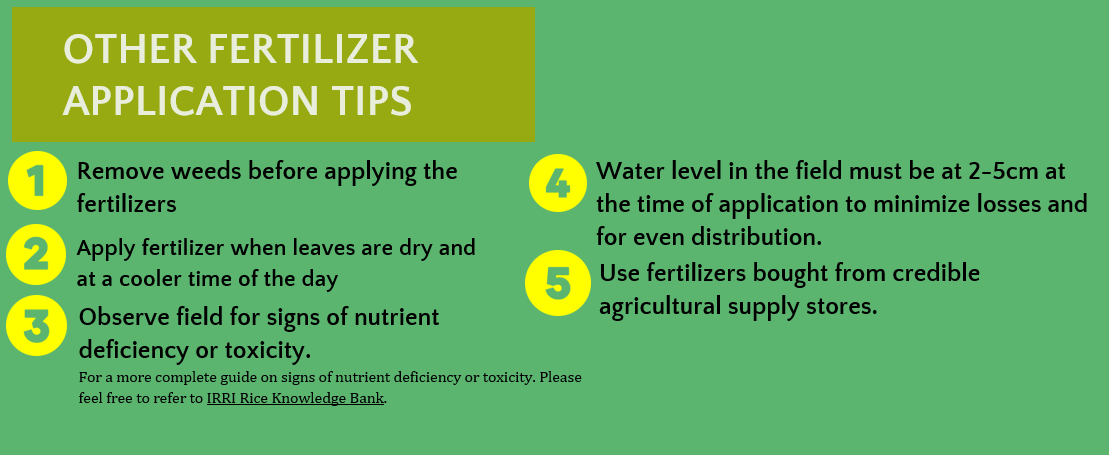
- Practicing efficient use of fertilizer
- Balanced nutrition by adding organic fertilizers
Maximize revenue by:
- Considering cost of inputs
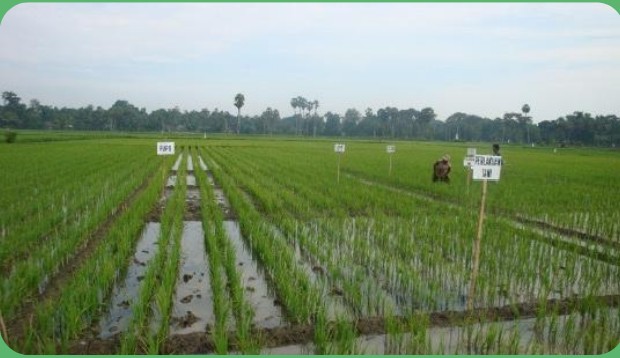
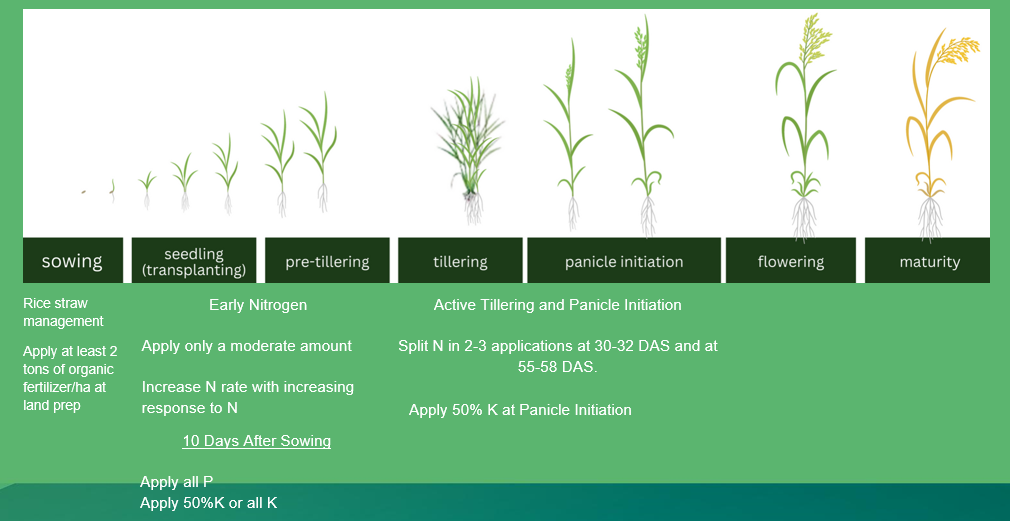
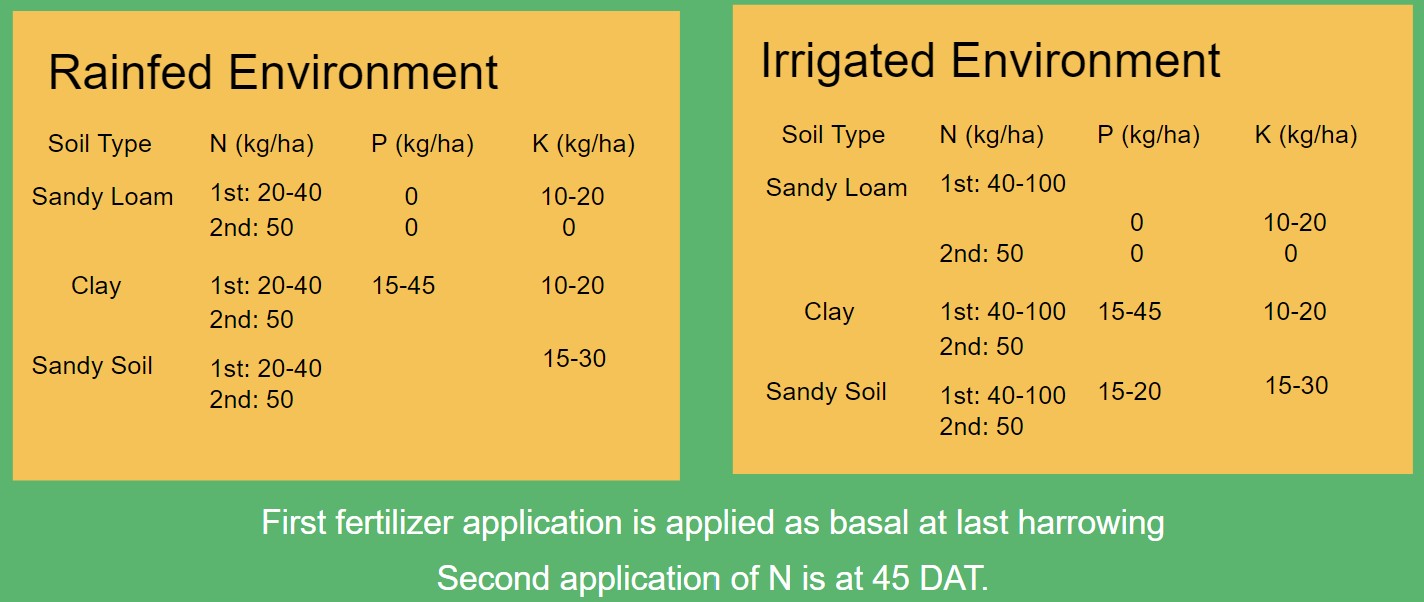
Fertilizer recommendation
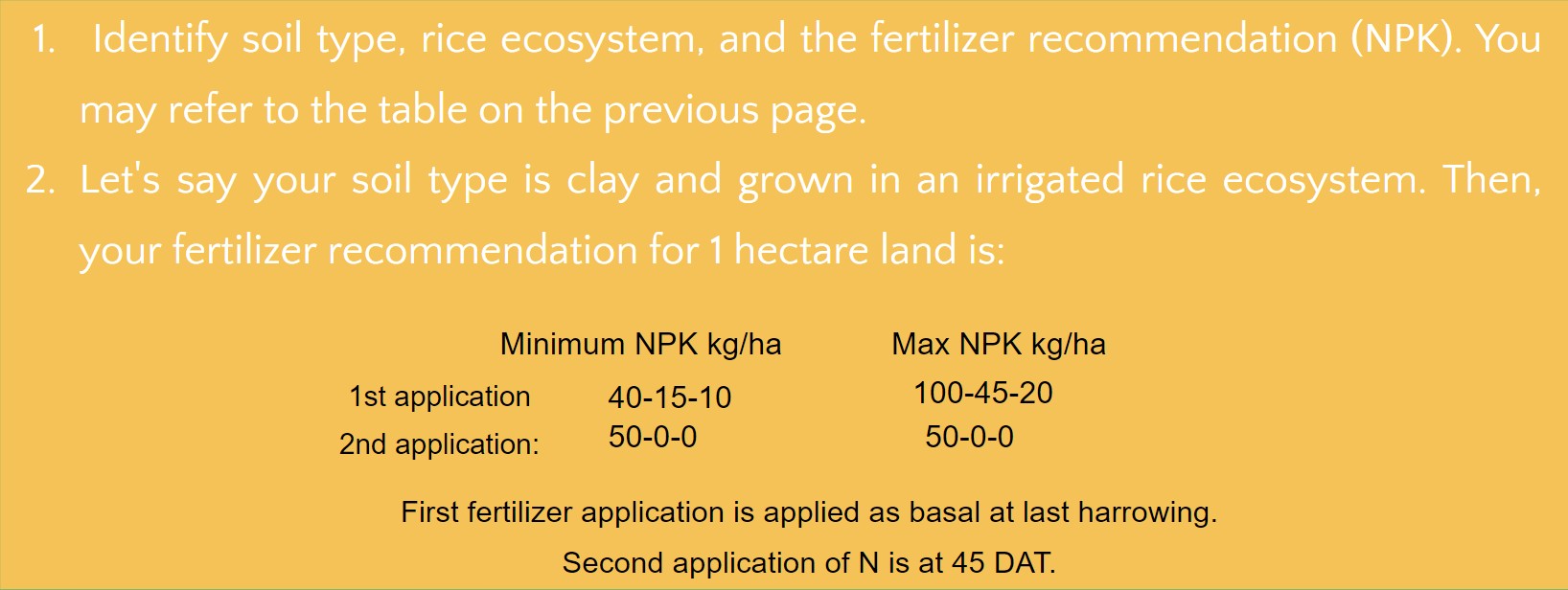
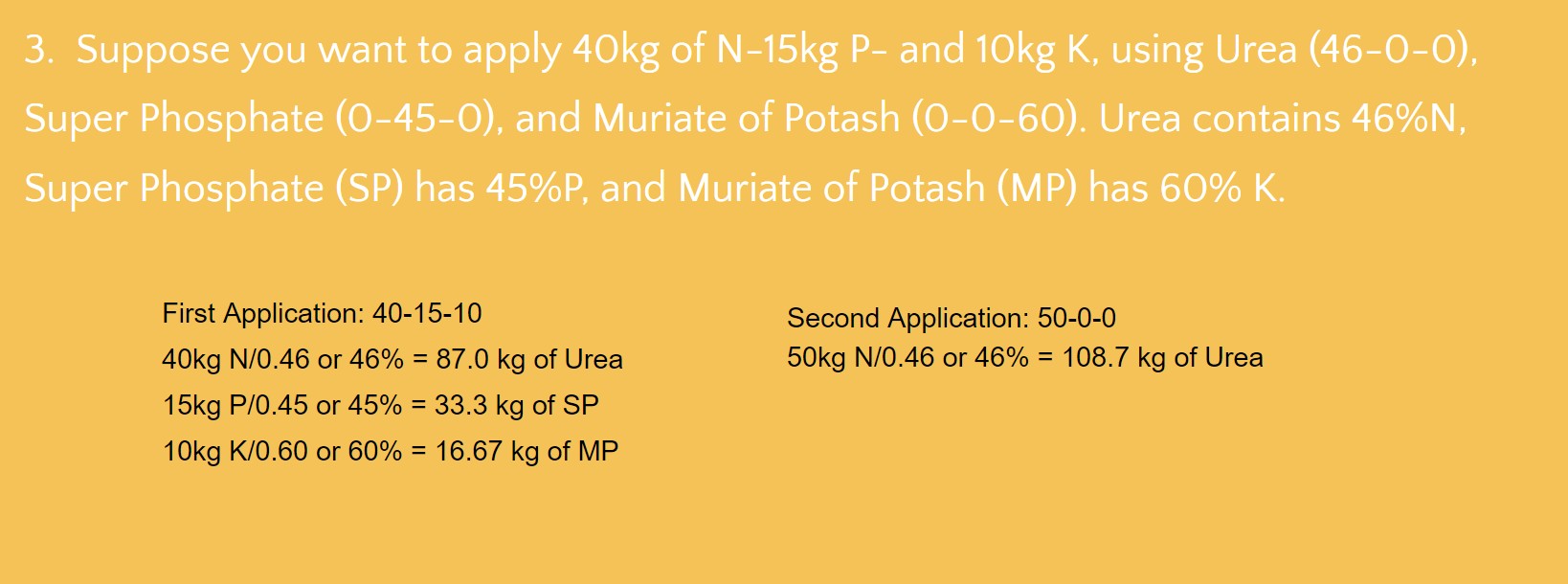
SAMPLE FERTILIZER COMPUTATION
RICE STRAW MANAGEMENT
- Straw is the only organic material available in significant quantities to most rice farmers.
- Incorporating rice straw and stubble returns most of the nutrients taken up by rice plants and helps to conserve soil nutrient reserves in the long term
- Early, dry shallow tillage at 5 to 10 cm depths (to incorporate crop residues and enhance soil aeration during fallow periods) has beneficial effects on soil fertility in intensive rice-rice systems.
- Shallow tillage of dry soil should be carried out up to 2-3 weeks after harvest in cropping systems where the dry-moist fallow period between two crops is at least 30 days.