Seed drying
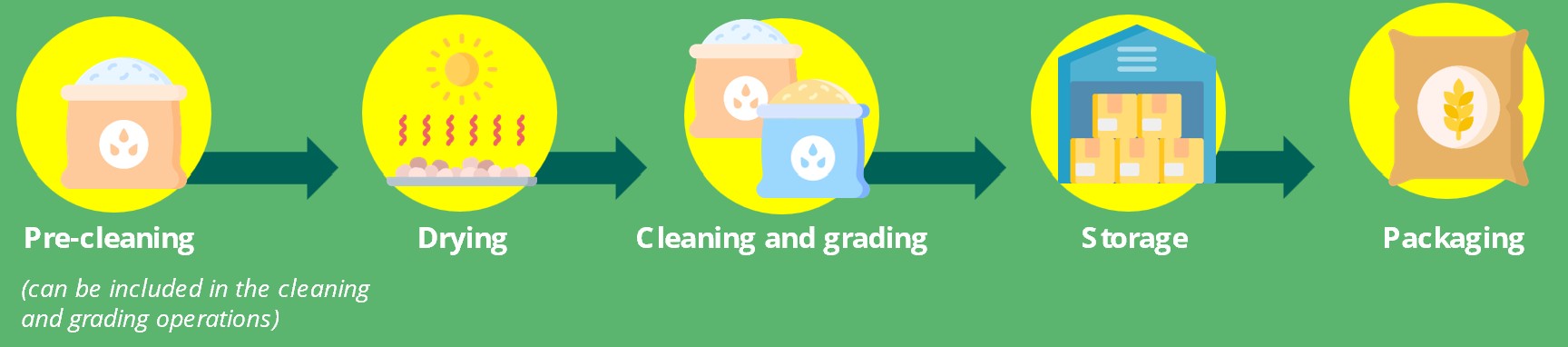
Seed processing includes the following basic processes:
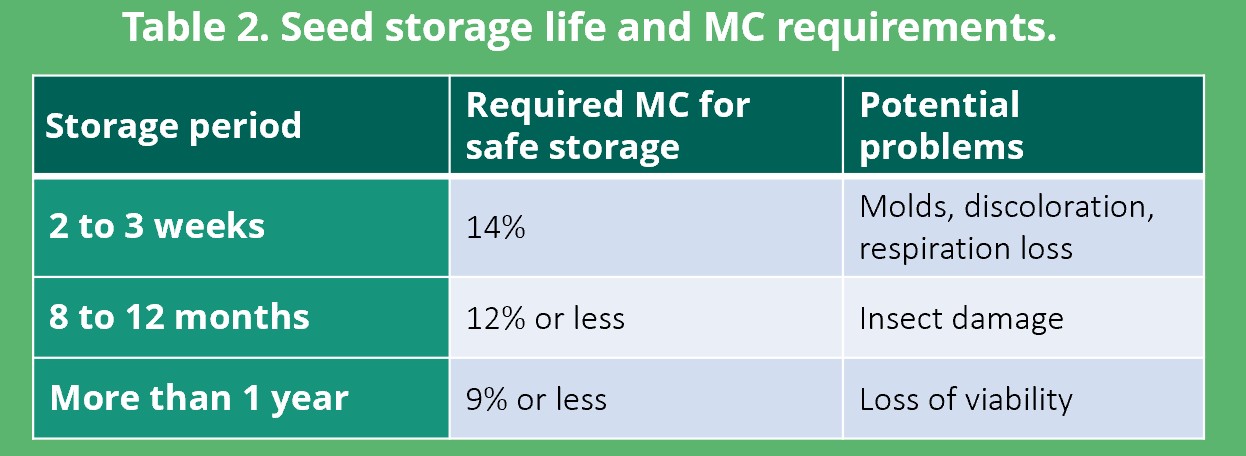
Rice seed should be dried to less than 14% moisture as soon as possible after threshing. When seed is to be stored for long periods, it should be dried to 12% or less and preferably placed in a sealed container.

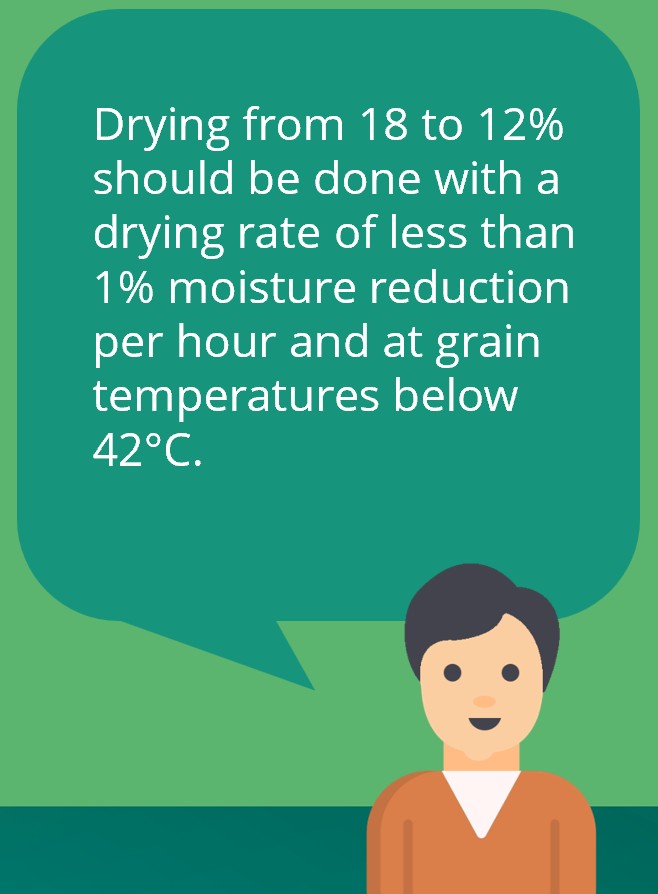
Drying and tempering the grain a number of times during the drying process will maintain seed quality. This means drying the grain on a drying pad for a number of hours or in the grain dryer to approximately 18% MC and then tempering the seed by allowing it to cool down for a number of hours in a bin or in the bag. This process should be repeated at least a couple of times until the grain reach 14% moisture or less.
1. Sun drying
Sun drying is not encouraged as it causes high losses due to uncontrolled temperature and birds. In the case that only sun drying is available, the following aspects should be noted:
- The seed should be spread in thin layers (2–4 cm) on the pad or floor and be turned and stirred every 30 minutes.
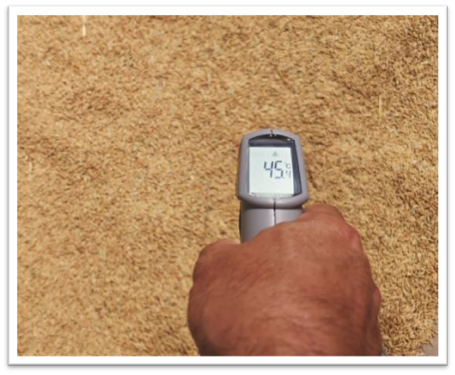
- Temperatures on drying pads can exceed 45°C (Fig. 7) during the day and this can cause seed damage. To reduce damage, the seed may need to be shaded during the very hot times of the day or time of exposure of the seeds to the sun should be reduced
2. Mechanical drying

Widely used machines for rice seed drying are the solar bubble dryer (SBD), different types of flatbed dryers (FBD), and recirculating batch dryers (columnar dryers). There is also a new dryer that combines in-stored drying and hermetic storage, called GrainSafe™ Dryer (GSD) developed by IRRI (Gummert et al. 2018).
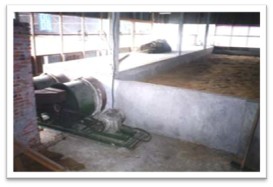 Flatbed dryers
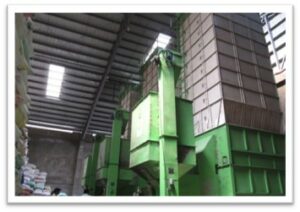 Recirculating batch dryers
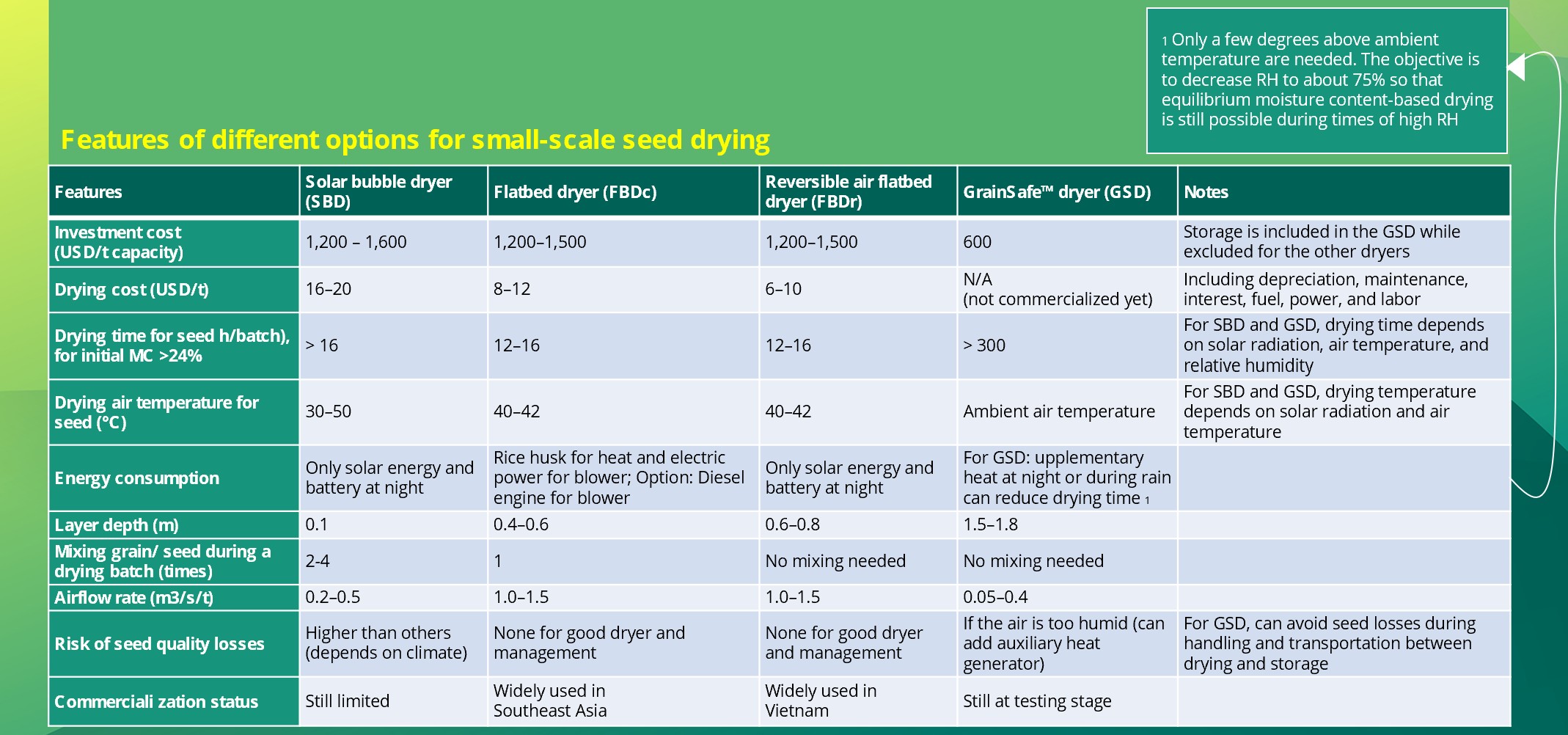
When drying seeds in mechanical heated-air dryers the following guidelines must be followed:
- Drying temperature: 40–42°C.
- Ensure proper airflow rate. For example, static pressure at 300–400 Pascal at a bulk depth of 30–40 cm will result in the required airflow rate of 1.2 m3/s/t or an approximate air velocity of 0.2m/s through the grain bulk. This is the essential factor for seed drying using flatbed dryers.
- For deep-bed or in-instore drying, which is usually followed by storage in the drying bin, equilibrium moisture content is an important factor to avoid seed rewetting and damage.
3. Equilibrium moisture content (EMC)
In storage, the final MC of the seed depends on the temperature and relative humidity of the air that surrounds the grain. The final grain MC resulting from storage is called the EMC.
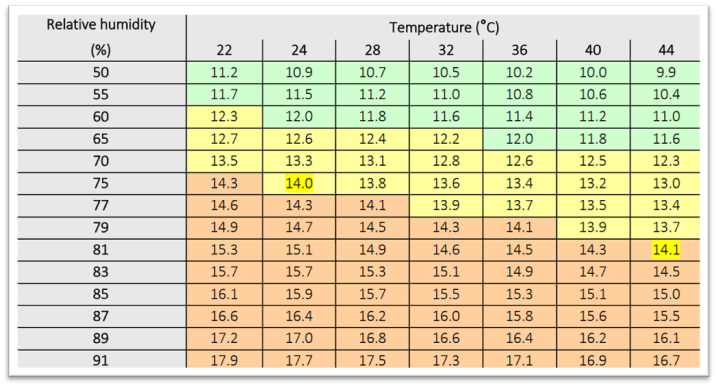
The colored areas represent the different conditions under which seed is safe for medium-term storage (green) and short-term storage (yellow). The orange areas are not safe for seed storage. If the grain is not protected against humidity in the air, particularly during the rainy season when the relative humidity may reach 95–100%, seed MC will raise leading to quality deterioration.
This section is adopted from a case study for a small-scale seed processing business model in Myanmar including seed drying using a flatbed dryer with a capacity of 4 t/batch and cleaning machine able to clean 500 kg/h. The production cost components are shown in the table below.
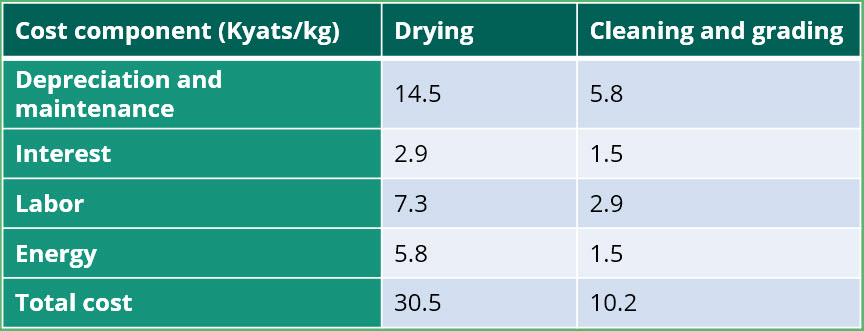
Seed production costs in Myanmar (Kyats/kg); USD1 = MMK1,403.27 (6 April 2020)
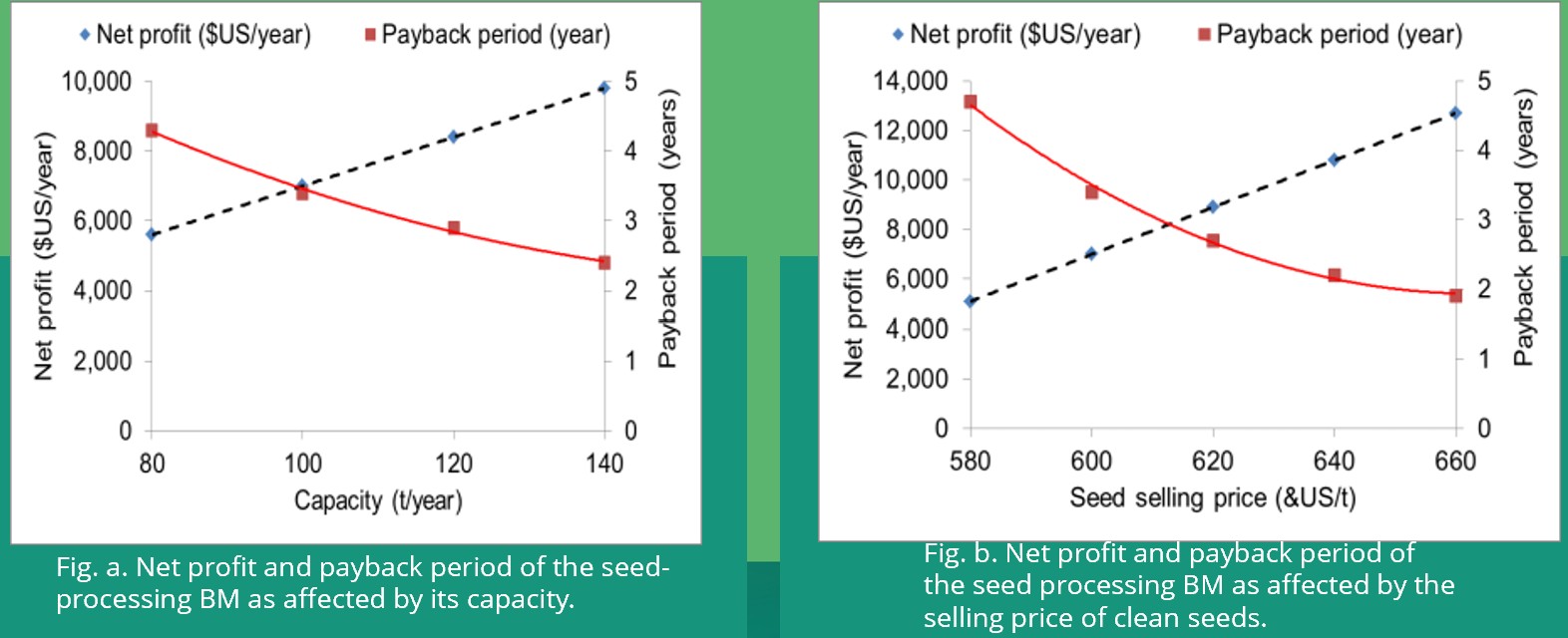
Figures show the sensitivity analysis of net profit and payback period for a seed processing business model (BM) depending on the processing capacity and selling price of the seed, respectively. At the point of 100 t/year (Fig. a), the BM will breakeven at 3.5 years. Assuming an increase of capacity and benefitting additionally from branding reputation starting from the year 3, net profit can reach more than USD12,000/yr (Fig. b).
Threshed seed contains all kinds of trash. This trash can be vegetative, such as chaff, straw, empty grains and foreign seed, as well as mineral materials, such as earth and stones. Seed should be as soon as possible after harvesting and certainly before storage.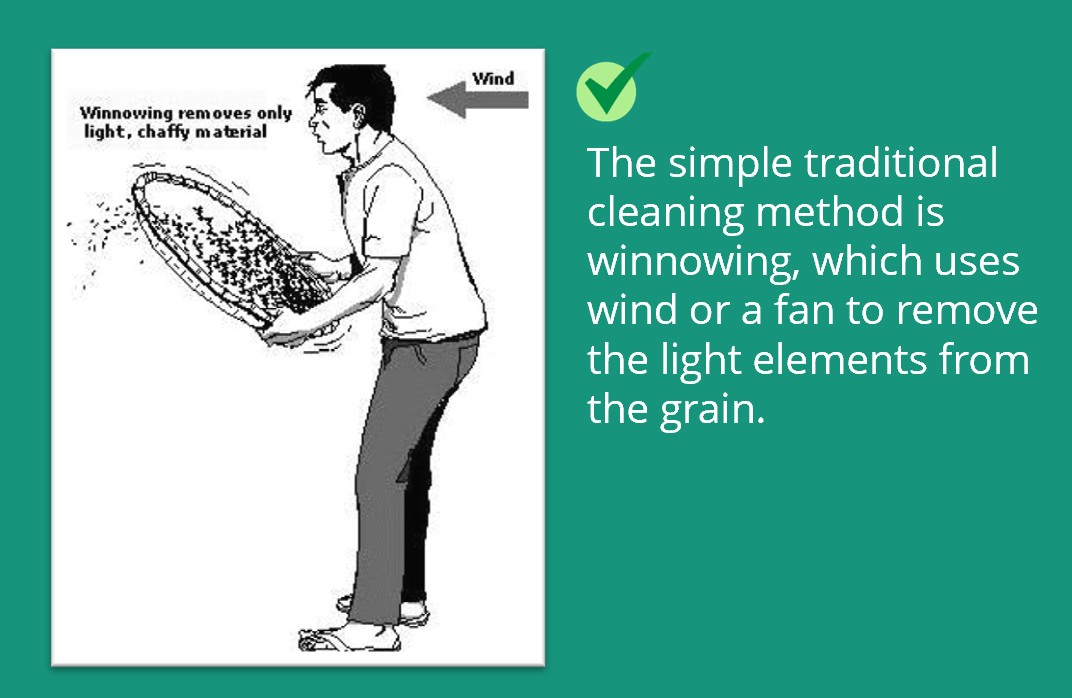
Mechanical winnowers that incorporate a fan and several superimposed reciprocating sieves or screens are now used in many countries. These can be manually powered or motorized and have capacities from 100 kg/h to 2–3 t/hr. Where combine harvesters are used, there is a trend towards using large-capacity centralized seed cleaners. These are normally equipped with a series of vibrating sieves and are capable of 10–30 t/hr.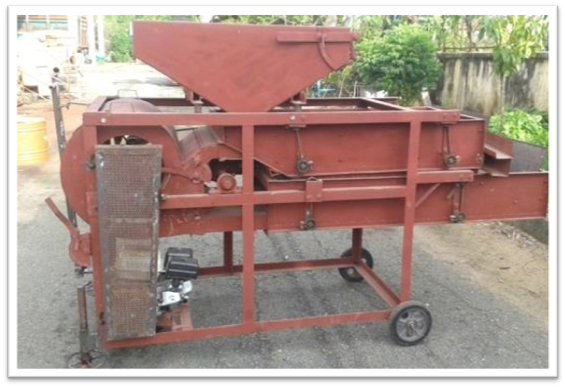
Seed cleaners are typically designed to separate grains from other materials based on specific weights and dimensions of the grains. A seed grader separates seeds into different fractions of seeds with different dimensions and weights. A simple seed cleaner often has two sieves for separating large and small impurities. A drum-type cleaner has rotating drum-sieves instead of oscillating-sieves. Drum cleaners usually have higher capacity but lower cleaning efficiency than the oscillating-sieve cleaners.
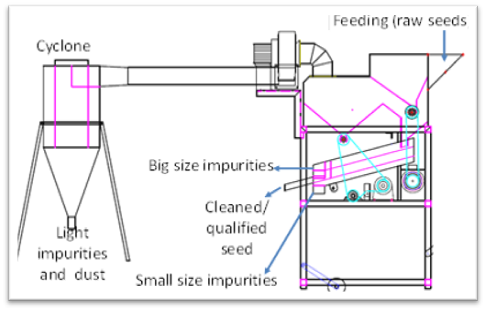
The figure above shows the schematic diagram of a seed cleaner combining a blower for dust and light impurity aspiration and the oscillating sieves for grading seeds as well as cleaning weed grains based on the specific weight differences. Seed cleaning and grading are very important to ensure better seeding operations (e.g., using drum seeders, seed sprayers, etc.), minimize seed rate and reduce weeds, and increase grain yield and quality.
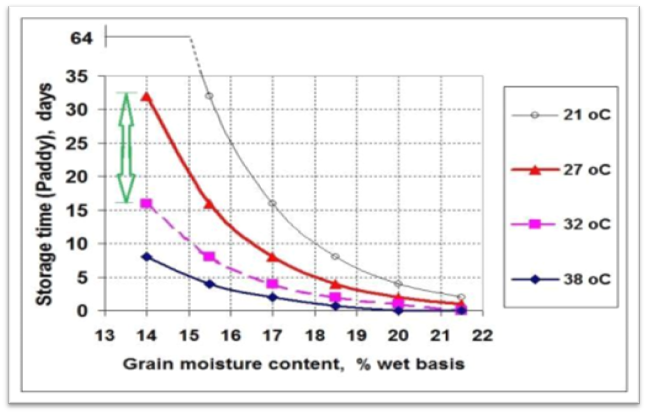
Storability of grain or seed is affected by climate (temperature and RH) and MC.
For example, Wimberly (1983) developed a model for paddy storage shown in the figure. At 27°C temperature, the storage time of 14.5% MC paddy is 26 days; while the seed at 16.5% MC can be stored for only 10 days.
If grain is to be stored safely for more than 3 months, it must:
- Have less than 12% moisture
- Be protected from insects and rodents
- Be protected from reabsorbing moisture, either from rain or the surrounding atmosphere

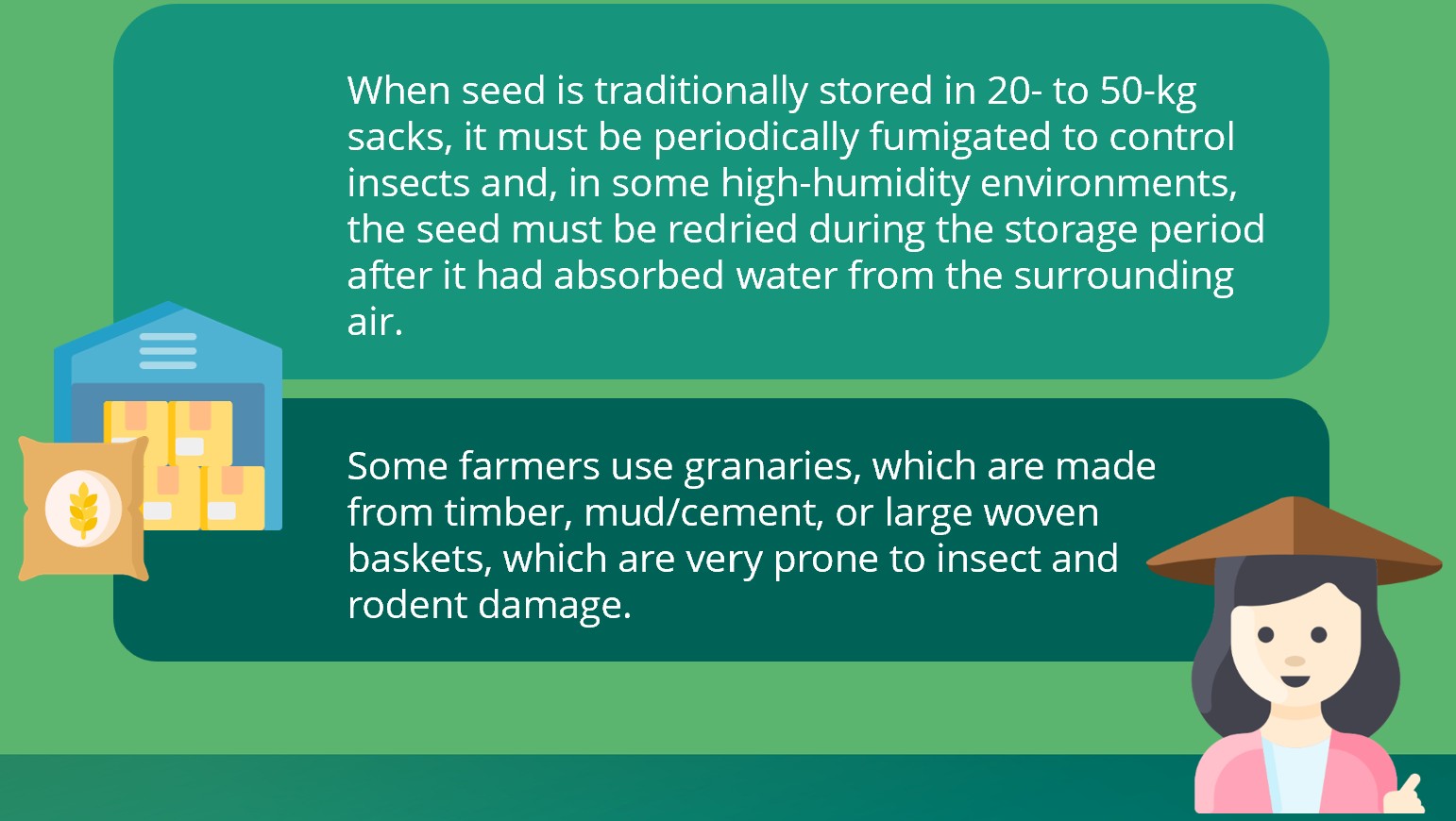

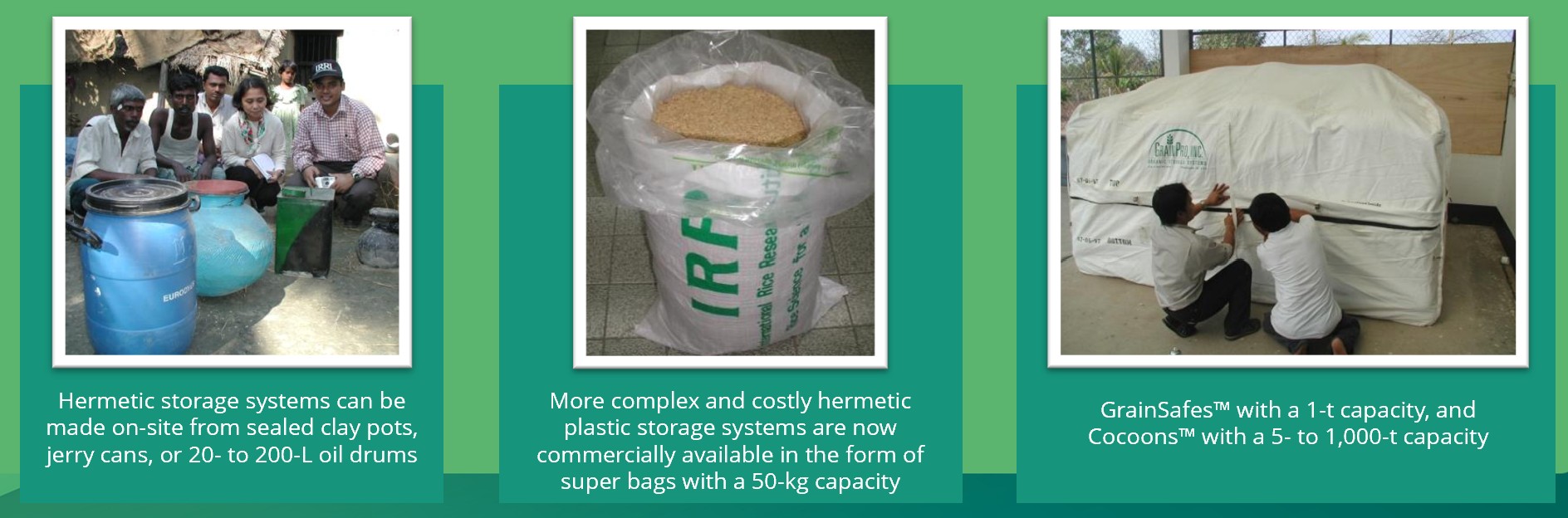
Sealed or hermetic storage is an option that works well in the tropics and in isolated areas. Drying the seed to 12% or less and storing it in hermetic storage reduces the risk of insect and rodent damage and the grain will not absorb moisture from the atmosphere or be damaged by rain. Research has shown that the life of farmers’ seed has doubled with the use of hermetic storage systems.